Philly’s Driverless Future Is Here, Whether We’re Ready or Not
As Waymo taxis prepare to launch here, urgent questions about safety, jobs, and who this technology actually serves still need to be answered.
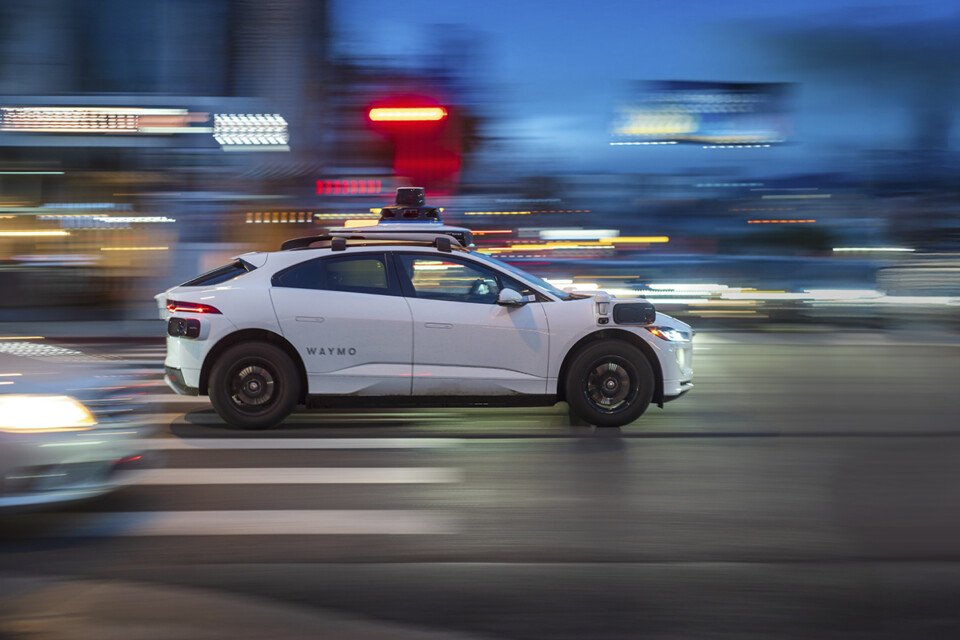
Is Philly ready for Waymo? / Photograph via Logoboom/Adobe Stock
Mamadu Barry — a 28-year-old structural engineer and part-time Uber driver — was behind the wheel this past February when he first spotted the future, tucked away in a parking lot in University City.
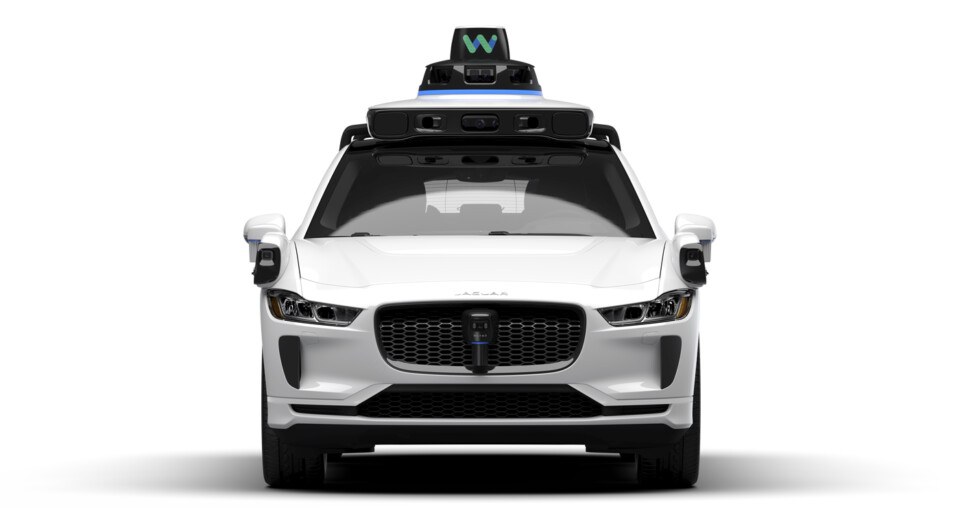
It was a white Jaguar SUV, though not straight from the factory: This model had sensors protruding from the hood like bug eyes. The back windows were pitch black; the front ones were clear. Most distinctively, a 360-degree rotational apparatus was rigged to the roof, striking a passing resemblance to a baby-bottle nipple. Emblazoned on the side of the car, rather than the automaker’s name, was the name of the company responsible for gussying it up: Waymo.
“I’m guessing they’re hiding them in there for now, getting ready to take over the world,” Barry said, when he spotted the vehicle.
He’s not wrong. Waymo — the self-driving car company owned by Google parent Alphabet — has rapidly scaled up its conquests in the past year. Today, Waymo robotaxis are zipping around 10 cities, including Los Angeles and Austin, where they can be hailed via an app. In some places, you can simply order one through Uber.
On a recent visit to Phoenix, where Waymo launched first, I shared the road with several driverless cars. I found their presence unsettling — the stuff of sci-fi — but my friend who lives in the city had actual horror stories, like the night a robotaxi erroneously dropped her off on the opposite side of town. And there was no stopping it.
Ever since, that friend’s husband has been exacting a bit of humanist revenge: throwing wood chips at Waymo cars whenever they’re idling on their street. Sensing danger, the vehicles move along. “I terrorize those things,” he says.
It’s arguably a hopeless rebellion. Hundreds of Waymo cars are on the road each day in Phoenix, the core of a national fleet numbering in the thousands. And Philly could be next. Waymo announced in September that it would be ramping up testing for a launch in several East Coast cities, including ours. You and I won’t be able to hail one for some time, contingent on approvals from PennDOT, but that hasn’t stopped the company from sending in human drivers in their cars to map Philly roads and train its artificial intelligence for prime time.
While Waymo spokesperson Ethan Teicher declined to give a timetable for offering commercial ride-hailing services in Philly, it sounds like the company is barreling toward a soft launch. “Our next step will be to operate the vehicles fully autonomously for employees only,” Teicher says.
You can imagine, probably, that plenty of Philadelphians won’t exactly welcome this future with open arms. Our distaste for outsiders and their ideas is legendary. “Distrust and caution are the parents of security,” Benjamin Franklin once wrote — and not much has changed our views since then.
Still, Waymo’s résumé does stand out for one notable reason: its safety record. According to the company’s own data, which is made available to independent researchers and is regularly submitted to peer-reviewed journals, AI drivers are far from amateurs. In fact, a recent company analysis, covering 127 million miles of trips taken by its fully autonomous robotaxis, suggested that autonomous vehicles are now vastly outperforming humans. The Waymo system, says Teicher, “achieved a tenfold reduction in serious-injury-or-worse crashes, and a twelvefold reduction in injury crashes with pedestrians.”
It’s quite the sales pitch, offering a tantalizing vision of the future, absent some of the worst forms of human behavior. AI drivers, after all, don’t text and drive. They don’t punch out someone’s mirror in anger; they don’t argue with their spouse while driving down 76. They don’t smoke or sneeze or answer the phone. They never try to flirt with you (or worse). To be clear, there are caveats to the company’s sterling record: Most driverless trips have been completed in safer-than-average driving conditions (avoiding freeways and hazardous weather for the most part). Still, the opportunity to save lives is a powerful motivator for embracing them.
Plus, proponents say, these cars are improving constantly due to deep-learning tools and advancements in computer vision, like the system affixed to the Waymo roof — those spinning baby-bottle nipples — which can “see” about 1,600 feet into the distance.
Adopted on a mass scale, advocates argue, driverless cars could be a public health breakthrough as much as a technological one. Some boosters have gone as far as to suggest that Vision Zero, the goal of eliminating traffic fatalities, might finally be in reach. (In Philly alone we average north of 100 traffic-related fatalities each year.)
Writing in The New York Times last year, Jonathan Slotkin, a neurosurgeon based a few hours northwest of Philadelphia, in Lewisburg, compared the early Waymo data to a groundbreaking clinical trial. “In medical research, there’s a practice of ending a study early when the results are too striking to ignore. We stop when there is unexpected harm. We also stop for overwhelming benefit, when a treatment is working so well that it would be unethical to continue giving anyone a placebo,” he wrote. Driverless cars, he believes, fall into the latter category.
Barry is less enthused. He’ll face immediate consequences from Waymo’s deployment, though he feels fortunate that ride-share earnings are not his primary salary. “I have friends whose lifestyle and family income are going to be very challenged,” he says. Waymo, after all, is partnering with Uber in some cities — ditching drivers in favor of AI. “[Uber] is a billion-dollar company, so [robotaxis] are not going to impact them that much. But for us? It could tank the entire industry for drivers.”
All of which highlights the obvious tension at play here. Road safety is a laudable goal. But at what expense? It gets downright existential, if you think about it: What is the human toll of replacing truck and ride-share drivers with robots in the country’s second-poorest big city? And, good or bad, are we ready for it?
Given a choice between modernity and tradition, Philadelphians will often side with the Luddites. Our public sector has at times been notoriously slow to adopt emerging tech (even email) over the course of decades. We had SEPTA tokens in circulation until two years ago. And who doesn’t look back fondly on the decapitation and dismemberment of hitchBOT? OK, maybe that last one had little to do with technology per se, but it seemed to amplify a familiar message: In Philly, no robots need apply.
Of course, in reality, it’s far less one-sided than that. While the city has had its fair share of technological failings, there has also been progress in some areas, like City Hall pulling the right levers over the past decade to promote electric vehicles and implementing various “smart city” pilots. And we have plenty of techno-optimists, it turns out, intrigued by the potential of Waymo to reshape how we live. “I imagine in a hundred years, future citizens of Earth will think it’s crazy that humans — with all of our flaws and distractibility and mixed judgment — were ever allowed behind the wheel of something so powerful,” says Jennifer Leonard, founder of a consultancy that advises law firms on AI strategy. There are plenty of folks in agreement with her in that modern town hall, Reddit, though there opinions range from “Philly drivers are scum” and Waymo should be an “order of magnitude safer” to those who’d prefer if we could bolster SEPTA before we see driverless cars hit the streets. Those mixed reactions are reflected in Harrisburg.
“It would be great if it turns out driverless cars are significantly safer than people behind the wheel of vehicles, but we know there are other proven things that make the roads safer,” says Philly-based Democratic State Senator Nikil Saval, who sits on the transportation committee. “Increased public transit is what we should be devoting ourselves to and orienting our cities around.”
In other words, maybe autonomous vehicles (AVs, for short) are a legitimate public-safety innovation, but they also invite concerns of their own, including from an environmental standpoint: While Waymo cars are emissions-free, like other advanced forms of AI they require significant electricity — and producing that, for the most part, requires, well, emissions. “These are like data centers on wheels,” Saval says. “Are we prepared for the massive increase in computing needs?”
There are also legislative and engineering feats that welcoming AVs would likely require: considering measures such as congestion pricing to offset the influx of volume on the roads that will result from AVs and changing our citywide approach to parking — a touchy subject for Philadelphians and elected officials.
But even more than all of these concerns, Saval says, he’s thinking about the potential human toll: “What are we prepared to do about those Uber drivers?”
We can’t rely on the big technology companies, because they have shown that they don’t care for their workers up to this point.” — State Senator Nikil Saval
About a decade ago, we were collectively asking the same question about taxi drivers when Uber stormed into Philly. Between 2014 and 2017, the value of a taxi medallion — the source of family-sustaining wealth for many taxi drivers — plummeted from a high of more than $500,000 to $10,000. Uber and Lyft eventually grew the total amount of jobs for drivers, although they ended up remaking them in the mold of the gig economy. Today, 74 percent of the roughly 29,000 Uber ride-share drivers in Philly work part time, or fewer than 30 hours per week. After expenses, they make an estimated $21.29 per hour. It’s better than the state’s paltry minimum wage ($7.25 per hour) but rarely enough to be considered a career.
One lesson that can be learned from the transition away from taxis is that some technologies don’t just obliterate jobs; they also transform the nature of work over time, often worsening outcomes for workers until there’s less to fight for and automation becomes inevitable. In other words, Uber had to crawl before Waymo could run.
Saval worries that this is a slippery slope — from taxi drivers to contract workers, and now contract workers to robots — that we’re right to be losing sleep over. “We can’t rely on the big technology companies, because they have shown that they don’t care for their workers up to this point.”
According to Waymo, the company employs local workers in the 10 cities where it’s currently operating at scale. Though Teicher declined to provide a specific number of jobs, he listed some of the positions that regularly need to be filled: operations partners with expertise in vehicle maintenance, construction and skilled trades, fleet management, and more — all told, “hundreds of people to support our service.”
Waymo also employs dozens of “remote assistance agents” in the Philippines. Wired recently wrote about these workers and their roles, describing them as “human babysitters” for robotaxis, which has led some conspiracy theorists to suspect that fully autonomous cars are currently a ruse — that there’s a person manning the joysticks abroad, like an episode of The Twilight Zone come to life. Even if that’s a stretch, the outsourcing of work to the Philippines is indicative of what can reasonably be expected of a Big Tech company’s relationship to employment in a city like Philly.
With roughly 29,000 active ride-share drivers in the Philly area, the situation has caught the attention of some in City Hall. Workforce concerns are one reason members of City Council, including at-large Councilmember Jim Harrity, recently called for hearings to study the wide-ranging impact of self-driving cars — including job displacement and consumer costs. In a city like San Francisco, where Waymo has grabbed 10 percent of the ride-hailing market share, the average fare remains 12 percent higher than Uber’s and 17 percent higher than Lyft’s.
It’s also difficult to imagine those costs going down substantially, at least anytime soon, considering that Waymo, the industry leader in self-driving cars, is billions of dollars in the red.
In the meantime, though, there’s also a chance that all of this hand-wringing over jobs in the short term is simply delaying the future, even slowing down the city’s ability to develop our infrastructure and economy for a new age. Besides, the question of whether Philly should or should not allow Waymo onto our streets is moot. It’s up to the state — not City Council — to allow Google to operate its robotaxis here (or not). And given that robots are expected to replace millions of driving jobs across the country over the next several decades, why would it be any different here?
Instead, this moment presents an opportunity to determine how this technology is deployed here — and who will ultimately benefit from it.
I want us to not only hold on to thinking about how we regulate the AV industry currently, but also hold on to the promise of what they mean for our society.” — State Representative Napoleon Nelson
State Representative Napoleon Nelson, a Democrat from Montgomery County, fears that without embracing AVs, Philly could slide backwards in more ways than one. “I think that all cities will need to have Waymo to be considered a real 21st-century metropolitan space,” says Nelson, a Mount Airy native and MIT computer science graduate. And, in fact, he thinks there are benefits to be gained far beyond Waymo.
Before robotaxis swarm our streets, Nelson would like all taxpayers to have access to the same technologies. He worries that the healthy fears over job losses related to robotaxis have overshadowed some of the positives around self-driving technology — such as the creation of newfound mobility for seniors and individuals with disabilities who could own a car without needing to drive it.
“I want us to not only hold on to thinking about how we regulate the AV industry currently, but also hold on to the promise of what they mean for our society,” he says.
Some women in media stories on the subject have reported that AVs feel safer precisely because they’re empty, considering the troublingly high rate of sexual assaults and harassment from ride-share drivers. Of course you hear counters to that, too. A recent article in the Washington Post described a phenomenon of passengers feeling like “sitting ducks” when people make threatening gestures toward the AI-controlled car, including multiple accounts of male drivers trailing and harassing women in Waymo cars. And the anxiety doesn’t end there. It’s not hard to imagine a world in which someone manages to hack into a car and drive off with you inside.
For Nelson, a Wharton MBA, these debates — and others, including Saval’s concerns over energy consumption — are not reasons to dismiss the technology altogether. He fears that knee-jerk instinct will hold us back from realizing that the toothpaste is already out of the tube when it comes to AI: “I do buy into the benefits of capitalism, and its ability to supercharge the innovation cycle,” he says. In his mind, there’s an opportunity to approach the adoption of driverless cars thoughtfully and with an eye toward equity, especially in a place like Pennsylvania. The state boasts a unique blend of institutions, such as Carnegie Mellon University, that are advancing the science behind these technologies; these institutions could be brought to the table with elected officials and workers to approach the future of driverless cars more thoughtfully.
“We’ve got the labor,” says Nelson. “We’ve got the strongest unions in the country. If there’s going to be a place that’s going to marry technology with the workforce, that should be happening at the table here in Harrisburg.”
In fact, the most fervent admirers of driverless cars have gone as far as to suggest that politicians who block Waymo will have blood on their hands, especially in a place like Philly, where traffic deaths are higher than in most cities.
What remains unclear is the timetable in Harrisburg for a decision on Waymo’s future in the commonwealth. Saval says that so far, he’s heard no rumblings about an impending hearing on Waymo from colleagues on the state’s bipartisan transportation committee. That doesn’t mean it can’t come together quickly.
In the meantime, nothing is stopping us — except, of course, the humans involved — from pushing for improved mobility and reduced accidents throughout the city and state. “There are many ways to get at safer streets,” says Saval. “Most of them are proven, and most of them don’t involve cars whatsoever. That will remain true, with or without the use of AI, and I hope we keep our sights on that.”
Back in early 2021, just as my own new sense of normal — or lack thereof — began to settle in during the pandemic, I took a plunge into the uncanny valley of artificial intelligence.
I visited a drone laboratory; I picked the mind of President Obama’s AI czar; I tried impersonating Jeff Goldblum using ChatGPT. All of it was reporting for a podcast called AI Nation, which, unfortunately, has lost relevance with each passing day due to the breakneck speed of AI advances.
One piece of content that hasn’t lost relevance, though, is a conversation with Andrew Hawkins, a senior transportation reporter for The Verge. At the time we spoke, he was one of the only people who’d ridden in the back of a Waymo in Phoenix, prior to the company’s public launch. And he recalled the first time he experienced a degree of hope as a passenger in a driverless car: witnessing a Waymo slam on the brakes for some pigeons in the middle of the road.
“You can very easily see a callous human driver just barreling through the flock of pigeons without any second thought,” Hawkins said, half-jokingly. “And yet this benevolent AI decided to spare the life of the lowly pigeon.”
That anecdote has been on my mind since Waymo’s arrival in Philly, because it clarifies something we can miss in thinking about AI: We often don’t trust our fellow humans to make the right decisions. I’d wager that some of the mistrust toward AI is a more generalized product of our lack of trust in one another, as a whole, which reached a new high during the pandemic.
As we turn over more control to AI in our daily lives, one risk is that we lose our ability to solve problems — because why would we, when the robot can do it? With the ingenuity that remains, perhaps the most pressing need is to find a way to make sure that AI is working for humanity, not against us, driving us toward a place we actually want to be.
We Asked, You Answered: Would You Waymo?
Photograph courtesy of Waymo
Riders and drivers around Philly on the prospect of driverless cars hitting the streets
“I’ve seen them in L.A. They’re everywhere there; my friends use them all the time. I can see using Waymo here, for low-stakes rides in which being late wouldn’t matter. What really appeals to me is not having to deal with a person when you’ve been out late, it’s midnight, you’re tired, and you just want to get home in peace. I wouldn’t use Waymo for my mom, though. She’s 90, and I call Ubers for her a lot. If she’s not at the exact address for pickup, she and the driver can communicate with each other and figure it out. With Waymo, who figures it out with you?” — Erin, 61, Chestnut Hill
“I’ve never been in one, and will never be if I can help it. Hope they end up in the same ditch as hitchBOT. The only thing driving robots are good for are spare parts for my car.” — Nicole, 37, Point Breeze
“Philly is the last place I would use a robot car. Philly drivers drive insane, first off. Secondly, the potholes, the amount of construction, the way pedestrians are … it’s just way too much. You need to learn how to drive efficiently and politely, but aggressively, in Philly. I don’t think a robot can handle all those desires.” — Saloua, 27, South Philly
“Waymo stops way too long at stop signs. Design one with a South Philly slide.” — Kate, 37, Fishtown
What the fuck is Waymo?” — John, 66, Whitman
“I am not ready for Waymo. I know I’m on the far end of the tech spectrum — like, I don’t have ChatGPT on my phone. All my friends do, but I won’t do it. I think it’s the downfall of humanity. I know that’s not the same as driverless cars, but it falls under the same umbrella — an umbrella I don’t trust. If the data makes you feel safe, then you go for it. I’m not there.” — Carrie, 45, Wayne
“We’ve been in a Waymo three times. It was actually a really cool experience because we got to put on music we liked and Mama got to sit in the front seat. It wasn’t that scary. It was actually really cool. I would definitely do it again.” — Nuala, 9, East Passyunk
“I’d never use one. I don’t trust technology that hasn’t been proven safe. If the brakes fail on a car, the driver still has a chance to get it to stop. Who tries to stop Waymo? — Robert, 65, Roslyn
“I’d take a Waymo because it eliminates human error. The cars have cameras and won’t get distracted, so it seems safer.” — Zoe, 18, Mount Airy
“For me, the Waymos cannot get here fast enough — and that’s mainly because they are programmed to obey the speed limit (as opposed to many humans I know).” — Jen, 46, Fairmount
Published as “Your Ride Is Here. Your Driver Is Not.” in the April 2026 issue of Philadelphia magazine.