Charles Barkley’s Philadelphia Black History Month All-Stars: Part 4
A closer look at Black Philadelphians whose ideas, work, and courage left a lasting mark on our city
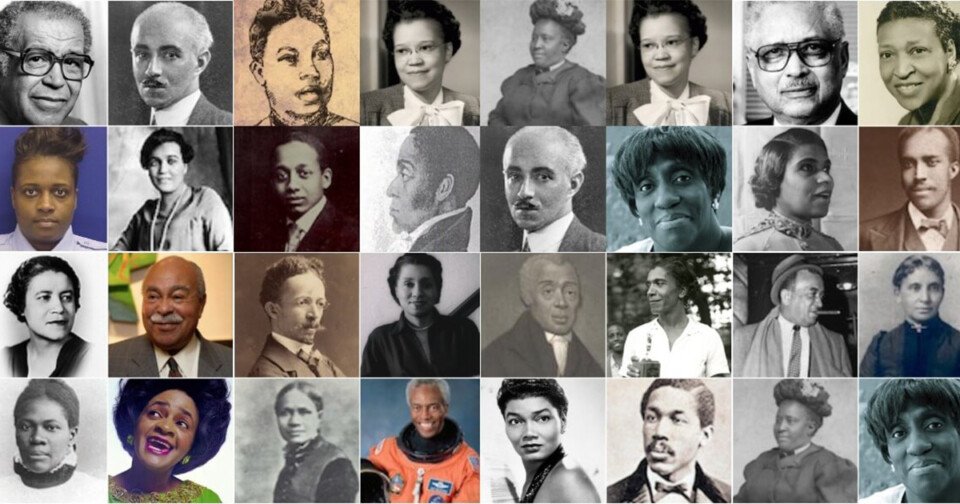
Philadelphia’s Black history is vast, visionary … and too often reduced to a handful of familiar names. So, a few years ago, The Philadelphia Citizen asked none other than Charles Barkley to help widen that lens: to spotlight Philadelphians whose influence reshaped science, culture, politics, and more, even if their names never made the textbooks.
See past installments:
This month, we’ve be shared a group of Barkley’s “Philadelphia Black History Month All-Stars” each week. Consider it a reminder, maybe — and an invitation — to keep expanding the story of who shaped this city.
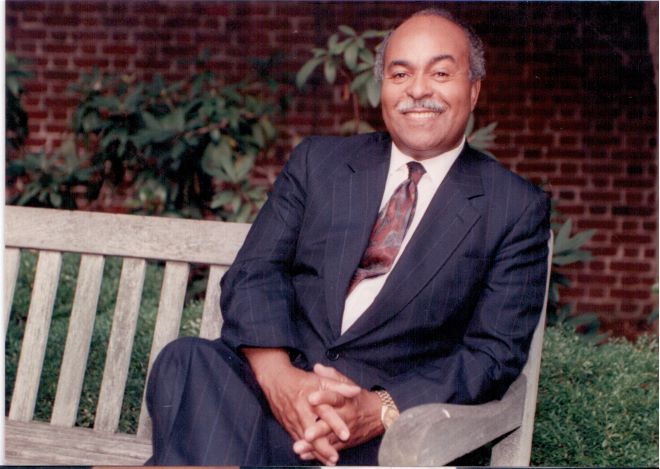
Dr. Walter P. Lomax Jr.
Physician
July 31, 1932 – October 10, 2013
Walter Lomax opened his first South Philly medical practice in 1958, where 10 years later he treated Martin Luther King Jr. for a respiratory infection.
He expanded to six health clinics, with over 20 doctors, and Correctional Healthcare Solutions, which sent doctors to 70 prisons in 10 states.
He also founded Lomax Companies, an umbrella for several businesses, including radio station WURD. He contributed to various African and African American causes, both personally and through his Lomax Family Foundation.
In 1994, he bought the plantation in Virginia where his great-grandmother and hundreds of others had been enslaved — what Michael Coard in Philly Mag rightly described as an “expression of real Black power.”
As part of WURD’s Founders Day in 2022, the city of Philadelphia renamed the 1800 block on Wharton Street “Walter P. Lomax, Jr., M.D. Way,” on the site of the first medical center he opened.
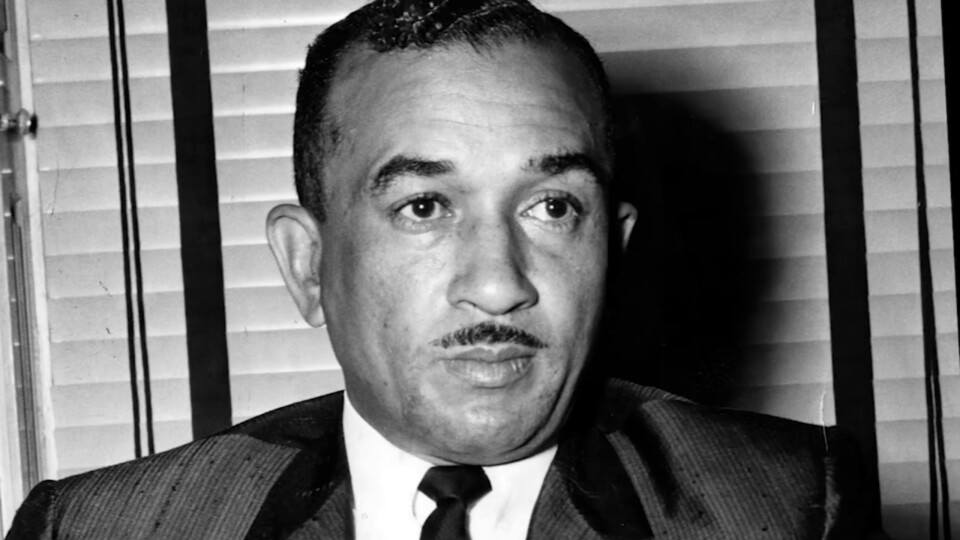
Cecil B. Moore
Civil Rights Activist
April 2, 1915 – February 13, 1979
I said to hell with the club, let’s fight the damn system. I don’t want no more than the white man got, but I won’t take no less”
An activist, lawyer, councilmember and sergeant, Moore lived a never-ending fight — one often for social justice and civil rights. “After nine years in the Marine Corps, I don’t intend to take another order from any son of a bitch that walks,” he once said. And that he didn’t.
Most famously, he led a group of protesters at Girard College in 1965 to push for the school’s integration.
In May of 1963, Moore organized a several weeklong picket line at the Municipal Services Building to fight for desegregated trade unions. Soon after, he picketed against the Trailways Bus Terminal, demanding that they hire Black workers.
Meanwhile, he advocated for more civic engagement from African Americans and held his own voter-registration drives. Though sometimes controversial for his unrelenting style, Moore was a force for change in civil society.
Nathan Francis Mossell
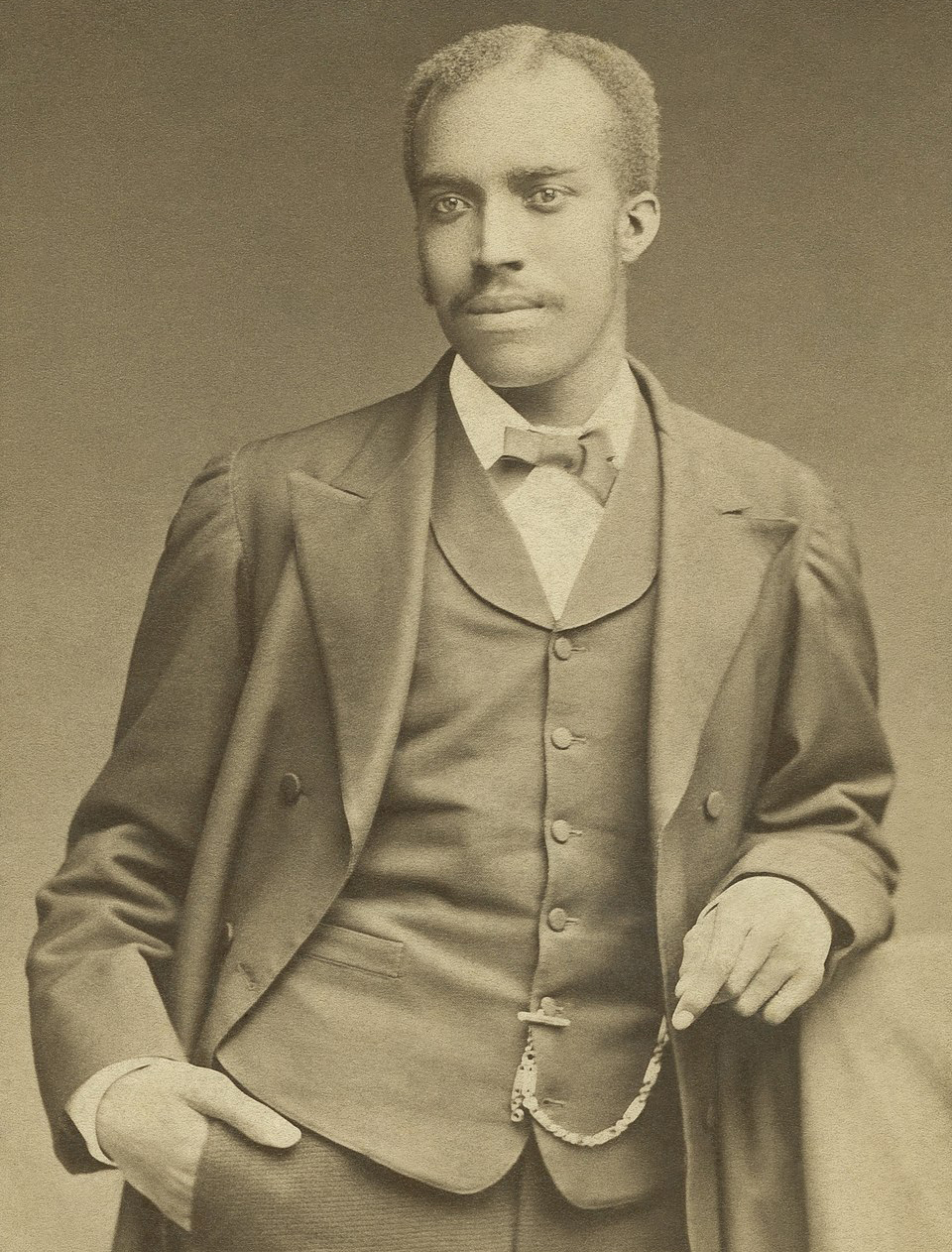
Physician
July 27, 1856 – October 27, 1946
One may wonder how a physician can find so much time to champion the cause of his people. I have been no less spared from the indignities of segregation and discrimination than the non-professional colored person. In waging a fight to help free others from the infringements of Jim Crowism, I also help free myself.”
Nathan Francis Mossell was a pioneer physician who established the first Black private hospital in Philadelphia, the Frederick Douglass Memorial Hospital and Training School, that both treated African Americans and trained Black nurses and doctors.
Uncle to Sadie Mossell Alexander, he was the first African American to graduate from the University of Pennsylvania medical school, and the first to join the Philadelphia County Medical Society.
Mossell was also an activist, founding the Philadelphia chapter of the NAACP, and joining W.E.B. DuBois’ Niagara Movement.
Leon Sullivan
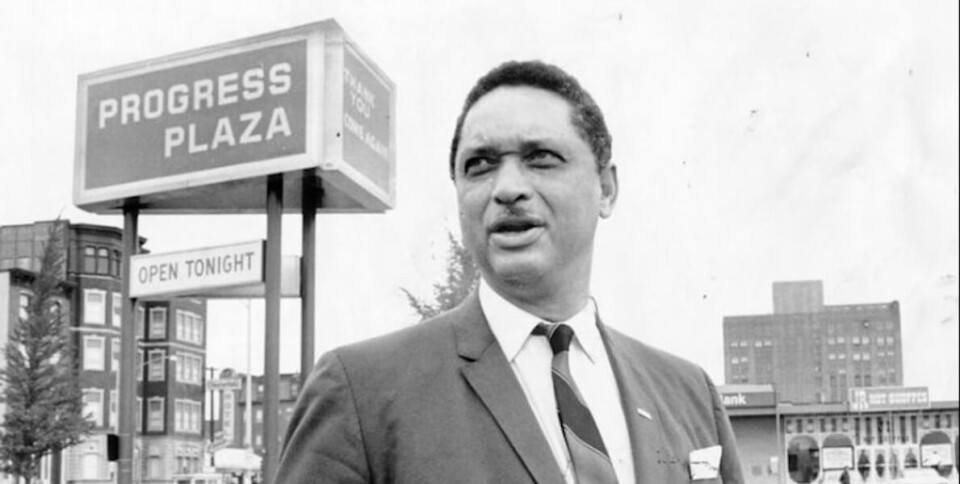
Civil Rights Leader
October 16, 1922- April 24, 2001
It is not un-American to take a stand against what we believe to be wrong, for America was born of struggle and nurtured on protest and demonstrations.”
Rev. Leon Sullivan — the “lion of Zion” — used his pulpit and his position as longtime pastor of North Philly’s Zion Baptist Church to organize for local African American causes, particularly in employment.
From 1959 to 1963, he led area Black preachers in organizing “selective patronage” boycotts of local companies — Tasty Baking, Sun Oil, Gulf — deemed to discriminate against African Americans in their hiring, urging Black consumers with the slogan “Don’t buy where you don’t work.” The movement opened up several thousand jobs to Black workers and drew national attention, including that of Martin Luther King Jr, who adopted Sullivan’s techniques in his Operation Breadbasket.
In 1964, Sullivan opened the first Opportunity Industrial Center, a job-service training program to teach manufacturing skills to Black Philadelphians. Sullivan led Zion for 40 years, growing it from 600 congregants to 6,000, and turning it into a community hub.
Throughout, he also spent time in South Africa helping to fight and dismantle apartheid and creating a set of rules — now dubbed the ‘Sullivan Principles’ — that serve as guidelines for American corporations doing business in South Africa.
Henry Ossawa Tanner
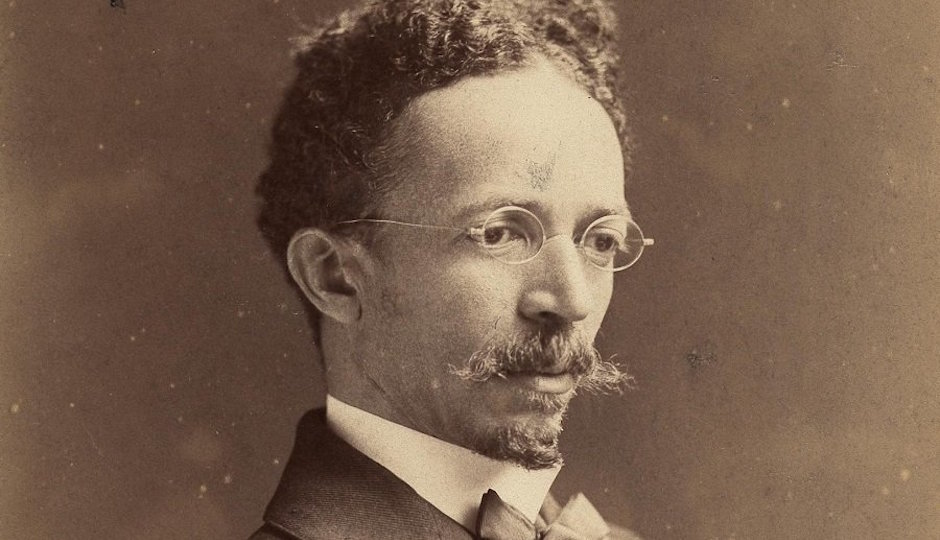
Painter
June 21, 1859 – May 25, 1937
I will preach with my brush.”
Henry Ossawa Tanner was the first African American artist to gain recognition on the world stage.
Noted for his depiction of landscapes and biblical themes, Tanner’s work caught the eye of many, including Thomas Eakins, another famous 19th-century painter from Philadelphia.
Oddly, Tanner thanked his poor health early in his life for giving him the time to hone his artistic skills. He trained at the renowned Pennsylvania Academy of the Fine Arts and Robert Vaux School before moving to Paris and settling there.
Nicodemus Visiting Jesus is believed to be his most famous work.
Clara Ward
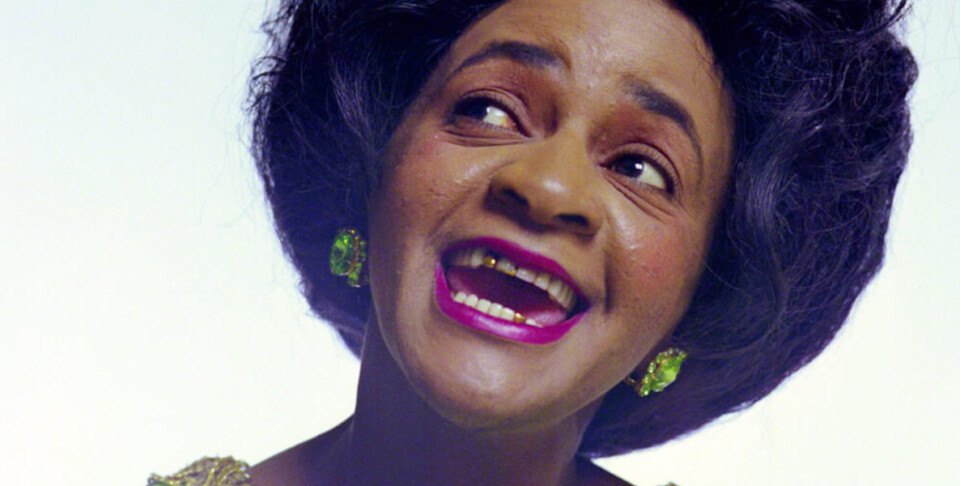
Gospel singer / songwriter
April 21, 1924 – January 16, 1973
I know the Lord. And I never have a lonely moment. I really kind of think, as far as my personal life is concerned, I got it made.”
Considered one of the greatest soloists in gospel history, Clara Ward and her Famous Ward Singers — a group started by her mother, Gertrude — toured their signature rollicking gospel sound around the country, in churches, arenas and even, quite controversially, nightclubs. Ward became the group’s musical arranger at the height of their success, including when they toured with the Rev. C.L. Franklin, whose daughter — Aretha — considered Ward a mentor.
Ward, who went on to lead the Clara Ward Singers, featured in the Hollywood movie A Time to Sing, with Hank Williams Jr., and was inducted posthumously into the Songwriters Hall of Fame.
Ora Mae Washington
Athlete
January 23, 1899 – December 21, 1971
It’s the struggle to be one that counts. Once you’ve arrived, everybody wants to take it away from you.”
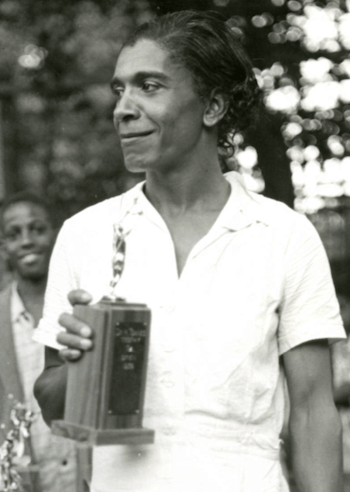
Ora Mae Washington started playing tennis at the Germantown YMCA and went on to become the first African American athlete to dominate not one, but two sports — both of which were segregated at the time.
Washington won her first national tennis championship just a year after picking up a racket. Then she found a calling on another kind of court: basketball.
She earned a spot on the Philadelphia Tribunes, one of the most dominant women’s basketball teams in history, in 1932. She helped them win 10 straight Women’s Colored Basketball World Championships.
Through all of the glass ceilings she shattered as a female African American athlete, she still had to work as a domestic worker cleaning homes to support herself after her athletics career ended.
She was inducted into the Black Athletes Hall of Fame in 1976, into Temple University’s Sports Hall of Fame in 1986, and in 2009 she was elected to the Women’s Basketball Hall of Fame.