Philly Mag’s Favorite Long Reads of 2025
Beef bandits, billboard wars, an epic high school prom, and profiles of the biggest names in Philly — it's our roundup of our favorite stories of 2025.

Settle in with some great Philadelphia magazine long reads from 2025.
It can be hard sometimes, in the daily throes of magazine creation, to take a step back. There are deadlines, busted deadlines, production snags, and photography snafus, and then it’s Tuesday and you start all over again.
So at the end of every year, it’s good to stop for a minute and reflect on the good work you’ve done. In that spirit, here are some of our favorite long reads from 2025, which, looking back, featured a surprising number of stories that take place on or around highways? (See, it’s good to reflect!)
Here are our favorites for 2025 — and check out our full archive here.
“I Hope Your Team Sucks and Loses”: Inside the Head of John Kruk
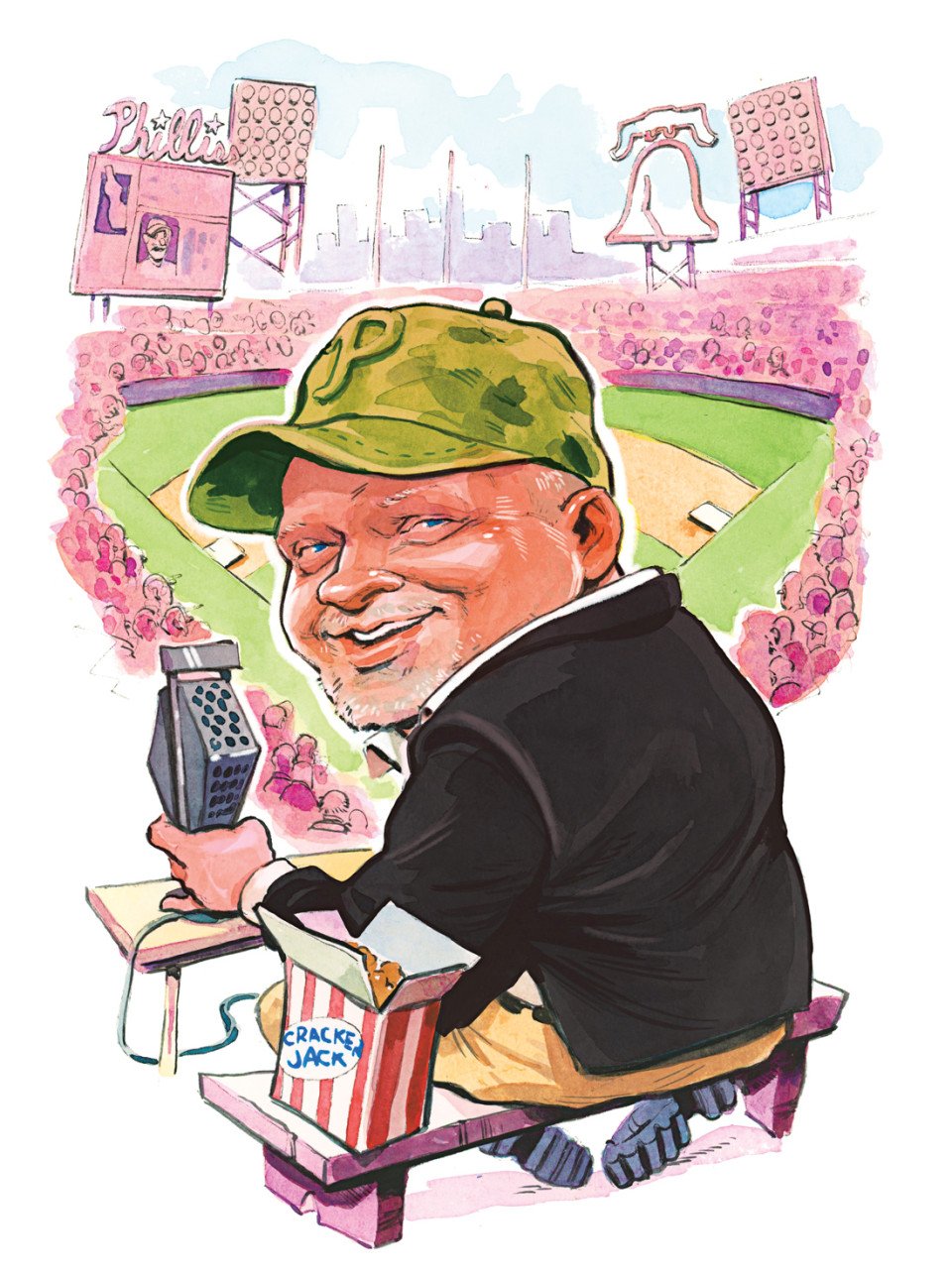
John Kruk / Illustration by Britt Spencer
If you’ve ever tuned in to a Phillies game on NBC Sports Philadelphia, you know that John Kruk isn’t your typical broadcaster. He’s unfiltered, hilarious, and refreshingly honest — sometimes to the point where you wonder if the producers are sweating behind the scenes. But that’s exactly why fans love him.
In our March issue, Jake Kring-Schreifels dove into what makes Kruk such a unique voice in the Phillies booth. From his no-nonsense takes on the team’s performance to his self-deprecating humor and random asides on everything from Dance Moms to giraffe encounters, Kruk brings an authenticity that’s rare in today’s polished sports media landscape. Keep reading here.
Steven Singer Loves the Haters
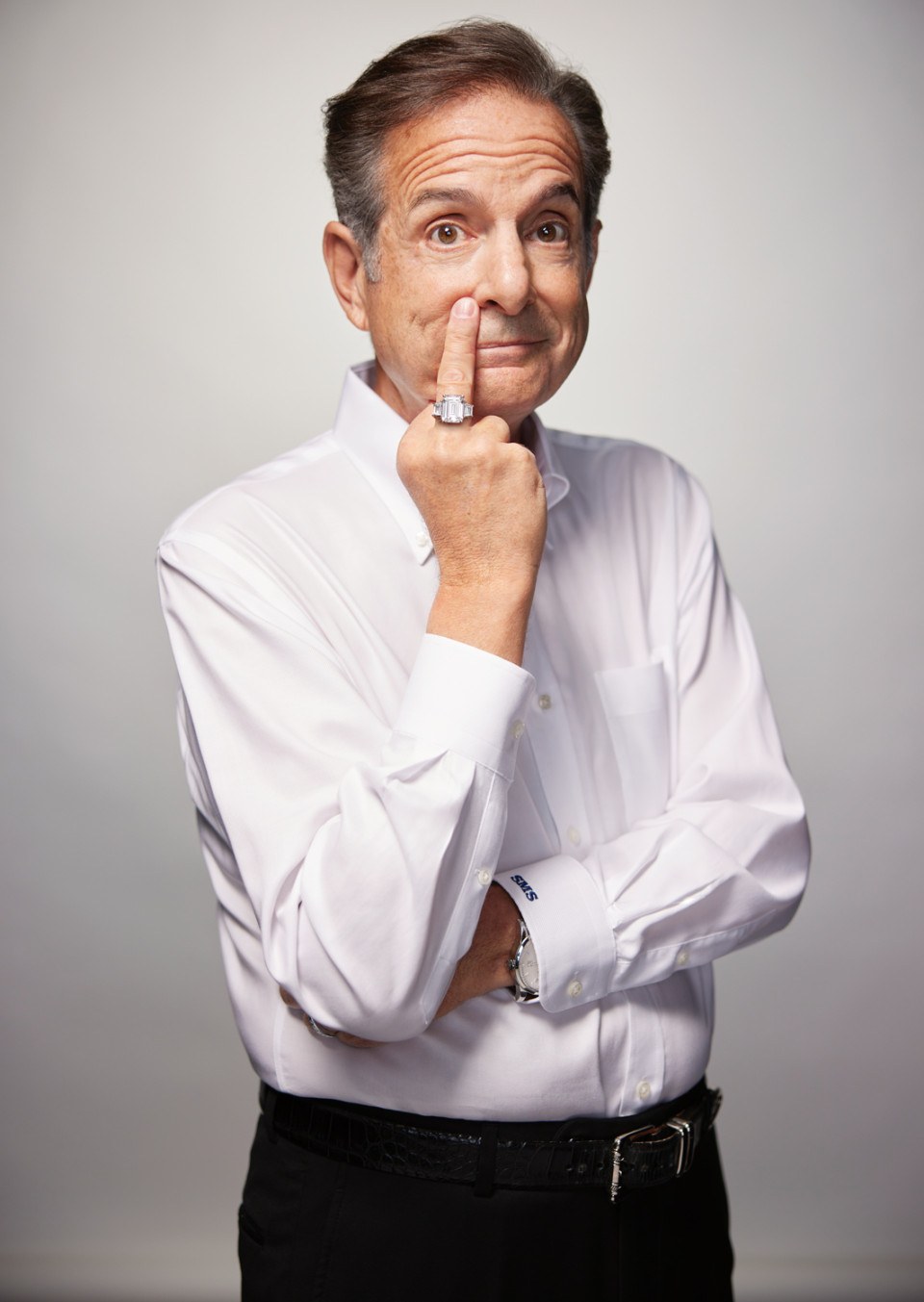
Steven Singer sporting the diamond ring he offered Travis Kelce for free to give to Taylor Swift / Photography by Jonathan Pushnik
You know the name. You’ve seen the billboards. Maybe you’ve even wondered who exactly it is who hates Steven Singer, and why? But how much do you really know about the man behind one of Philly’s most recognizable brands?
Emily Goulet took readers inside the wild world of Steven Singer — the jeweler-turned-marketing-mastermind who built an empire on audacity, innovation, and just a little controversy. From his ubiquitous “I hate Steven Singer” ads to his partnership with Howard Stern to viral marketing stunts, he’s become a Philadelphia institution.
But this isn’t just a business story — it’s personal. Singer has battled health scares and navigated the changing retail landscape, and now he faces the biggest challenge of all: ensuring that his brand thrives without him. Keep reading here.
The Beef Bandits of Nicetown: Inside the Biggest Cargo Theft Ring in Modern Philadelphia History
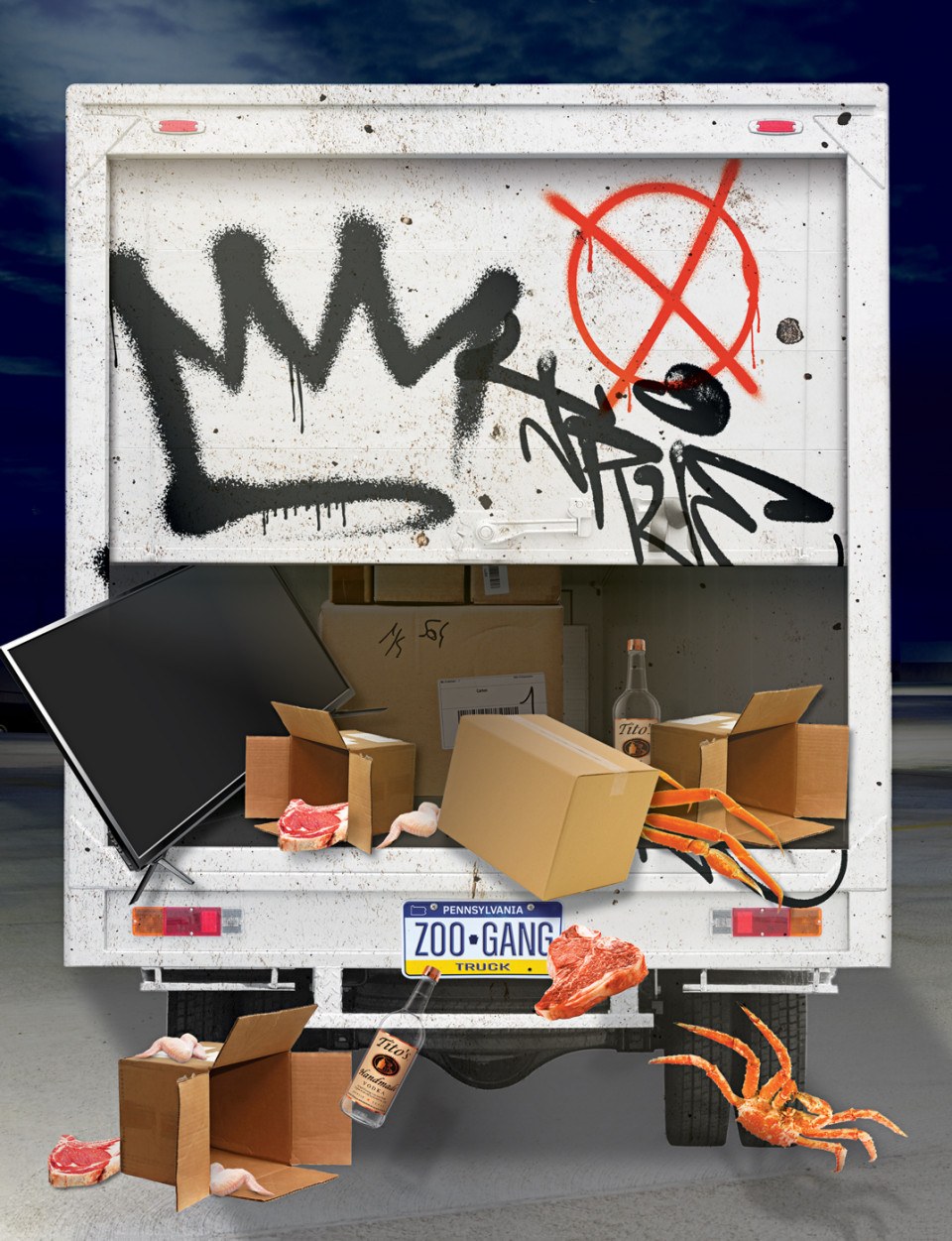
Snow crab legs. Chicken wings. Thousands of pounds of beef. Inside Philly’s biggest cargo theft ring in modern history. / Photo-illustration by Leticia R. Albano; images via Getty Images
Snow crab legs. Chicken wings. Thousands of pounds of beef. That’s just part of what one North Philly crew managed to jack in a cargo theft operation so big the feds had to step in. Since 2022, freight had been quietly vanishing from delivery trucks before ever reaching restaurants and stores. At first, police were left scratching their heads. How were entire trailers of meat disappearing in broad daylight without a trace? But what looked like a few scattered heists soon revealed a pattern — and a level of coordination that pointed to something much bigger than a couple of neighborhood guys with bolt cutters.
Matthew Korfhage followed how a web of North Philly crews evolved from street-level operations into something that resembled a full-blown criminal enterprise — one that stole everything from 10,000 pounds of dimes to 10,000 pounds of turkey wings.
What makes this story so compelling isn’t just the scale of the heists — it’s what they reveal about the evolution of street crime in Philly. Keep reading here.
How One Store Became Ground Zero for West Philly’s Gentrification War

Baltimore Avenue / Photograph by Nazir Wayman
Baltimore Avenue has long been one of West Philly’s most iconic streets, a place where coffee shops, salons, art spaces, and dive bars lived side by side. But lately, the corridor has felt … off. Storefronts sit vacant for months. Beloved local businesses close. In their place, soulless vape shops pop up, sparking confusion and frustration. Is the avenue gentrifying? Declining? Stuck?
A discount “bin” shop of castoffs and returns from places like Amazon and Costco was the final straw for Jen Kinney, who, for our October issue, explored the tension at the heart of West Philly right now: a neighborhood that fiercely protects its identity and values local ownership, but is also craving new life, new hangouts, and yes, even a decent cocktail bar. Residents want businesses that are affordable but not “cheap,” modern but not corporate. It’s far more complicated than a simple boom-or-bust narrative.
Beyond the anecdotes — the bar destroyed by a fire, the ice cream shop that never came back — Kinney zooms out to expose the structural forces shaping Baltimore Ave: rising rents, online shopping, pandemic aftershocks, zoning roadblocks, and the financial squeeze on small businesses. It’s a window into the future of every city corridor fighting to save — and stay — itself. Keep reading here.
Highway to Hell: Inside PennDOT’s Plan to Widen I-95 Through South Philly

The I-95 expansion will change the landscape of Philadelphia neighborhoods. / Photography by Kyle Kielinski
In South Philly, PennDOT’s proposal to expand I-95 has stirred fierce pushback from residents who say those plans could swallow up community sports fields and repeat the mistakes of the past. Decades ago, the original highway carved through neighborhoods, displacing families and fracturing communities. This time around, as David Murrell reported in March, locals are organizing to make sure their voices can’t be sidelined again. Their fight is about more than just a highway — it’s about what our city prioritizes, and who gets a say in its future. Keep reading here.
Can Mussels Save Philadelphia’s Waterways?

The Philadelphia Water Department’s Lance Butler and William Whalon in the Manayunk Canal / Photography by Gene Smirnov
What if the key to cleaning up Philly’s rivers isn’t some futuristic gadget or expensive new plant, but … mussels? Yes, the same humble shellfish you might order with frites could be the city’s secret weapon in the fight for cleaner water. In our September issue, Cari Shane took us inside a first-of-its-kind Philadelphia Water Department project that could transform our waterways forever.
Mussels are nature’s filtration systems, and reintroducing them into local rivers and streams could yield monumental results. Each adult mussel can clean six to 10 gallons of water per day. Now multiply that by the millions of mussels PWD hopes to put into our watershed.
Biological wonders aside, this story has a bit of hopeful magic to it. It’s about looking at an old problem with fresh eyes, and finding an unexpectedly simple, elegant solution. Instead of a massive high-tech intervention, the city is betting on something small, natural, and kind of beautiful. It’s the sort of idea that makes you stop and think about how interconnected everything is, and how sometimes the best fixes are already part of the world around us. Keep reading here.
Billboard Wars: How Personal Injury Lawyers Took Over Philly
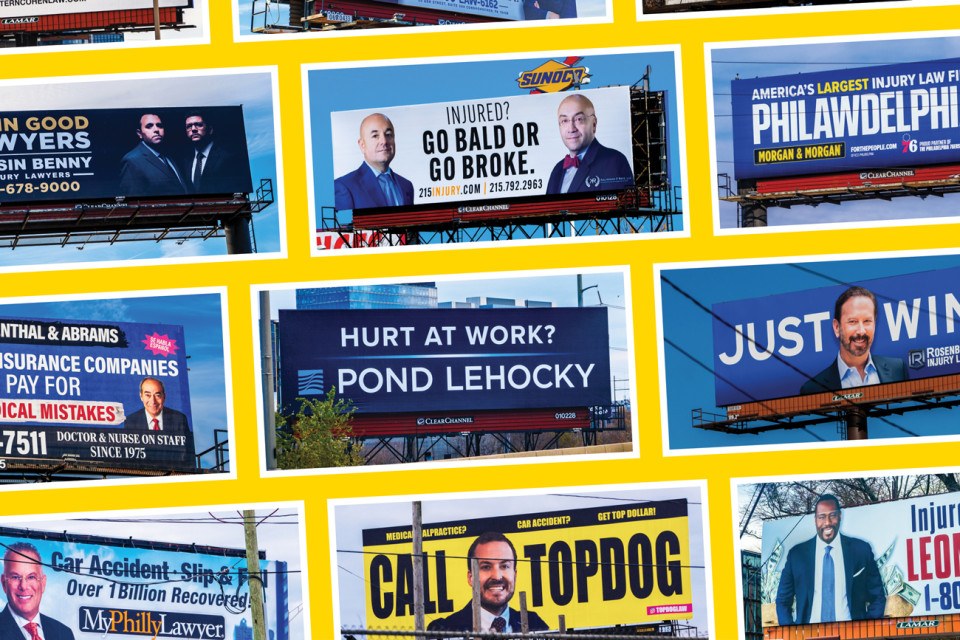
Personal injury lawyer billboards all over Philly / Photography by Jeff Fusco
If you’ve driven down I-95 or scrolled through social media, you’ve seen them: bold personal injury ads promising big payouts for your misfortune. “Jawn” Morgan, TopDog … they’re unavoidable. But beyond the catchy slogans and smiling lawyers, these ads are shaping more than just the legal industry.
In our February issue, Tom McGrath explored how the explosion of legal advertising has fueled a rise in lawsuits, record-breaking jury verdicts, and even higher insurance costs. Some firms now operate more like marketing machines than like traditional practices, spending millions on advertising to bring in a steady stream of cases — and, ultimately, big-dollar verdicts.
The success of this model is driving a transformation in the legal industry, with large firms dominating and smaller ones struggling to compete. “Perhaps such an evolution was inevitable,” McGrath writes. “If, 120 years ago, America’s energy was being put into high-minded civic reform, today it flows mostly into creating ever more robust bottom lines.” Keep reading here.
Phila and Rachel Lorn’s Trick to Success? Desperation

Rachel and Phila Lorn / Photography by Stevie Chris
Change is hard, especially for those of us blessed with stubbornness. For Phila and Rachel Lorn, the owners of Mawn, change has come in waves this year: Phila’s James Beard Award for Emerging Chef and Best New Chef honor from Food & Wine, a spot on the New York Times Best Restaurants in America list, a new oyster bar concept down on Passyunk — and the dozens-deep lines that come with all of that.
Jason Sheehan spent time with the couple as they navigated this new reality, one where in just three years they’ve gone from opening their first restaurant to the top of the food world. Sometimes, the best Philly restaurant stories aren’t just about food — they’re about fight. Phila’s journey — from growing up in a Cambodian refugee household to navigating years in the city’s restaurant scene — is a story about hunger in every sense of the word.
Phila and Rachel Lorn’s path to acclaim wasn’t glamorous: There were near-deals gone wrong, pandemic setbacks, and nights wondering if the dream would ever happen. But when they finally opened Mawn on 9th Street, it was proof that they could make something real simply by believing in it. In a city that celebrates grit, Mawn feels like the ultimate Philly story — equal parts love, risk, and rebirth. Keep reading here.
50 Years of Fresh Air: An Oral History

Fresh Air’s Terry Gross in the early ’90s / Photograph courtesy of WHYY
Fifty years ago this past September, Terry Gross, just 24, sat down in the host chair and turned Fresh Air into a genre-defining radio show. It’s been a soundtrack of American culture — and at its center are Gross’s warm, incisive interviews that have become the gold standard in radio. Gross has talked with more than 13,000 guests, shaping their stories into conversations that feel both intimate and revealing. Her preparation is meticulous, but her curiosity is the key. “I’ve always thought of myself as a big ear when I’m doing an interview,” she tells Pete Croatto in his oral history of the show.
But, as Croatto reveals, Gross’s path to broadcasting was anything but straightforward. It wasn’t until she stumbled into college radio that she found the medium that would define her career. What followed was decades of persistence, creativity, and collaboration that transformed a scrappy Philly show into one of NPR’s most beloved national programs, now heard by millions every week. Now 74, Gross has cut back her hours but has no plans to retire. Fresh Air remains a touchstone — a daily reminder of the power of listening, shaped by the dedication and artistry of its longtime host.
Croatto’s oral history takes us from the leaky WHYY offices where Gross once worked alone to the present day, as she adapts to a changing media landscape. Along the way, meet the people behind the scenes — from early allies to famous guests — who helped the show become the cultural force it is today. Keep reading here.
Inside Pennsbury High’s Legendary Prom: The Most Epic School Dance in America

Pennsbury High School Prom / Photography by Dina Litovsky
Every spring, Pennsbury High School pulls off something few communities can even dream of: a prom so massive, it takes a six-figure budget and an army of volunteers to make it happen. We’re not talking some glitter and streamers in a gym — this is a full-scale production with giant art installations, elaborate themed sets, special effects, celebrity performances, and a pre-prom parade.
As Emily Goulet revealed in her epic behind-the-scenes story, what makes this prom remarkable isn’t just the spectacle, but the way the entire community rallies to create it. Parents, alumni, and neighbors spend months painting, building, and fund-raising, transforming the school into a magical place for one incredible night. It’s as much a community tradition as it is a student dance. Keep reading here.
Josh Shapiro’s Next Big Step
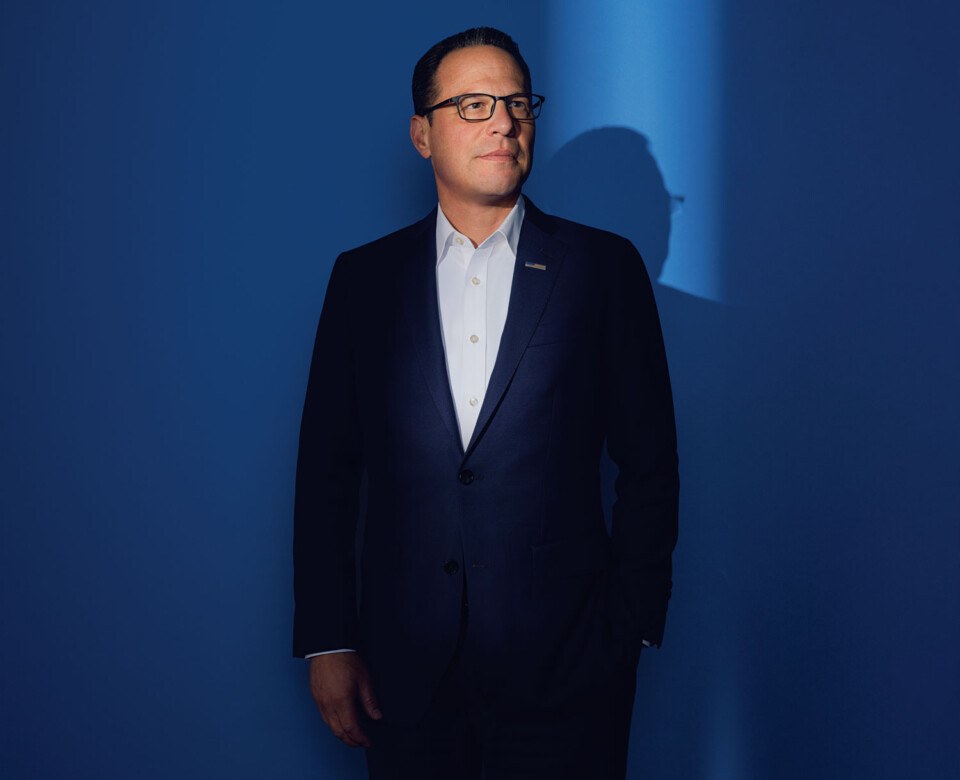
Josh Shapiro / Photograph by Colin Lenton
Josh Shapiro has been a fixture in Pennsylvania politics for two decades, but his profile has never been higher. For our July cover story, Tom McGrath took readers inside the political calculus and personal ambition of a guy who’s never lost a race, has a knack for showing up at just the right moment, and might just have his sights set on the presidency.
McGrath followed Shapiro from a high-powered DNC dinner in Philly to a timber mill in deep-red Mifflin County, and into the thick of a vice presidential vetting process that nearly landed him on the 2024 ticket. It’s a rare unguarded look at a politician whose steady rise has been anything but accidental. “To his supporters,” writes McGrath, “Shapiro’s unbroken climb is evidence of his rare political talents. To his critics — and there are plenty, including some Democrats — his steady ascension reflects something else: cold ambition. There’s nothing that says both can’t be right.”
As 2028 looms and national attention turns our way, McGrath offered a personal, layered portrait of the governor. Keep reading here.
How Surfside Took Over the Cocktail World

Riding the undeniable wave of Surfside / Photo-illustration by Andre Rucker
You’ve seen the sunny, striped cans. You’ve probably had one at a tailgate, on the beach, or at a backyard barbecue. From its humble Philly beginnings, Surfside is now a national brand that’s exploded into one of the fastest-growing drinks in the country. The proof is in the crushed cans: “They don’t teach you this in business school, but if you really want to know what the people of your town or city are drinking, all you have to do is look at the ground,” says Surfside co-founder Bryan Quigley.
Emily Goulet traced the story behind Surfside — from the early days of distilling vodka with a makeshift, “legally dubious” still in a basement to becoming a beverage company that’s now moving millions of cases annually. What sets this story apart isn’t just the product’s rise, it’s how it happened. The team behind Surfside relied on gut instinct, word of mouth, and a relentlessly hands-on approach. They made something no one else was making, and watched demand explode. “No one in Big Beverage realized what this little distillery in Philly was doing until it was impossible to ignore,” writes Goulet.
Surfside’s success story is a wild, Philly-born ride that’s still unfolding. Keep reading here.