
Allan Domb: One Easy Revenue-Raising Idea for Philly
There are only two options for generating more money to fund schools and city services, writes the former City Councilmember. And one is clearly better than the other.
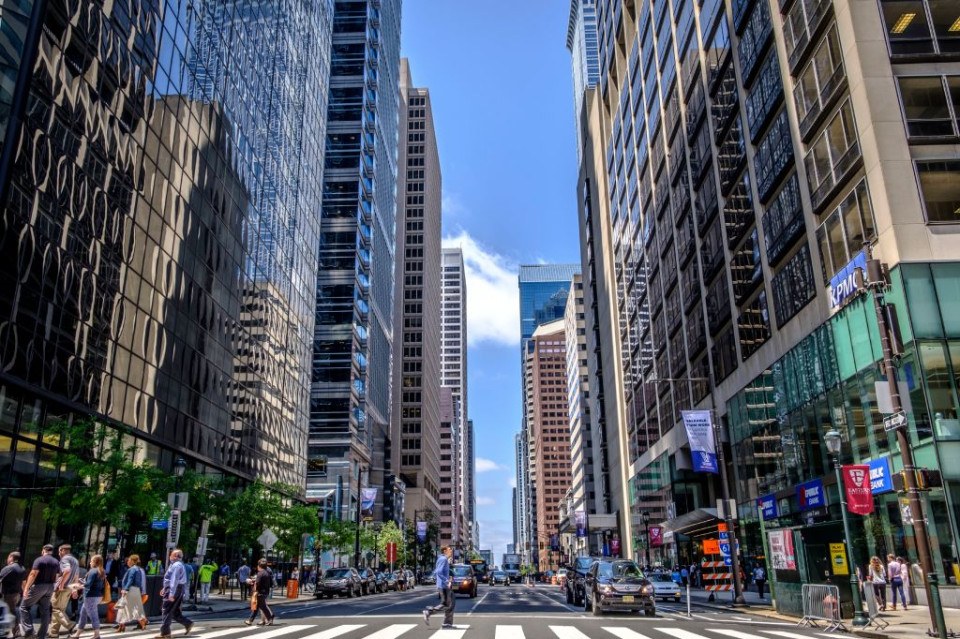
Busy Market Street in Center City / Photograph by Jumping Rocks/Universal Images Group via Getty Images
Listen to the audio edition here:
The City of Philadelphia is once again in the middle of budget season. That means City Council has been debating, and will continue to debate, how much money the city will spend in the coming year and exactly where that money will come from.
In my two terms as a City Council member, I learned a lot. But one of the most basic lessons was this: When it comes to raising revenue for the city — revenue used for schools, streets, public safety, and so many other services — there are really only two choices:
A. We can increase taxes on the existing tax base — i.e., raise the amount each person and business pays
B. We can expand the tax base — i.e., grow the number of people and businesses who contribute
Doesn’t seem like a very hard choice, does it? The more people and businesses that are pitching in, the easier it is on everyone.
Unfortunately, historically Philadelphia hasn’t paid nearly enough attention to option B. In fact, our business tax rates — among the highest in the nation — actually discourage businesses from locating here, which keeps our tax base smaller than it rightfully should be. (Only one of our 10 largest employers pays any business taxes; the rest are either government entities or educational/medical institutions.) The result: everyone who lives and works here pays more in taxes than they should.
Let me tell you a story to illustrate my point.
One morning not long ago, I had breakfast with the CEO of a large company that is based in the suburbs. The CEO lives in Center City, and he told me that in order to avoid rush hour traffic going out to his suburban office every day, he has to leave home by 6 a.m. And in order to beat rush hour traffic coming back into the city in the evening, he has to leave his office by 4 p.m. (or wait around until after 7:30 p.m.).
I listened and offered him a solution: I told him I could give his company — free of charge for one year — an entire floor in an office building I own on Rittenhouse Square. I wanted him to see how great working in the city would be not only for him, but for his employees. He was intrigued and said he’d get back to me.
A few weeks later he called and said he’d talked it over with the company’s team. While he appreciated my offer, the tax hit the company would take by moving even a portion of its jobs into the city was too high.
That basic reality — that it’s just too expensive to locate a business in the city of Philadelphia — is one reason so many companies headquartered in places like Conshohocken and King of Prussia remain there, when they could and should be in the city.
And it’s the reason that 47 percent of Philadelphia residents actually commute to jobs in the suburbs when they could and should be working for companies based in the city.
The amount of money the city loses because of this structure is astronomical. Even if we lowered Philadelphia’s business tax rate in order to attract more companies, we’d more than make up for it with all the economic activity those new companies would spark. We’d have more businesses, more workers in the city, more money being spent — and ultimately more tax revenue.
As they consider next year’s budget, I respectfully ask my former colleagues on Council to keep all of this in mind and concentrate on how they can significantly expand our tax-paying base. It would be a game-changer for all of us.