The Invasive Fish Reviving a Philly Classic — and the Restaurant Making it Happen
A new take on a historic dish is back on the menu, thanks to a sustainable (and unlikely) solution.

Catfish and waffles from Rex at the Royal / Photograph by Kae Lani Palmisano
Welcome to Just One Dish, a Foobooz series that looks at an outstanding item on a Philly restaurant’s menu — the story behind the dish, how it’s made, and why you should be going out of your way to try it.
Picture this: It’s the mid-1800s — Philadelphia is a major port city, a juggernaut of manufacturing and production, a thriving economic center, and a leader in all corners of culture from commerce to cuisine. Industry titans and vacationers alike flock to Philly to get a piece of the action as well as a taste of its famous catfish and waffles.
It may be hard to believe, but there was a time when the cheesesteak wasn’t the dish that defined the region. From the mid-1800s through the 1900s, Philly was all about catfish and waffles, and chef Angie Brown, culinary director of Rex at the Royal, is bringing it back to its former glory with help from an invasive species.
What is Catfish and Waffles?
Referred to as the “Wissahickon Supper,” catfish and waffles was a staple at inns and roadhouses along the Schuylkill River. According to Historic Philadelphia Foodways: A Consideration of Catfish Cookery, some takes of the dish were humble — a simple fillet of catfish battered and fried in butter until it turned golden brown served on top of a thin waffle, sometimes with a little bit of white sauce, and served alongside hash and coffee.
Other versions were said to have been more elaborate, full-course meals beginning with catfish and waffles with relish, followed by steak and fried potatoes, stewed or broiled chicken, more waffles, and coffee.
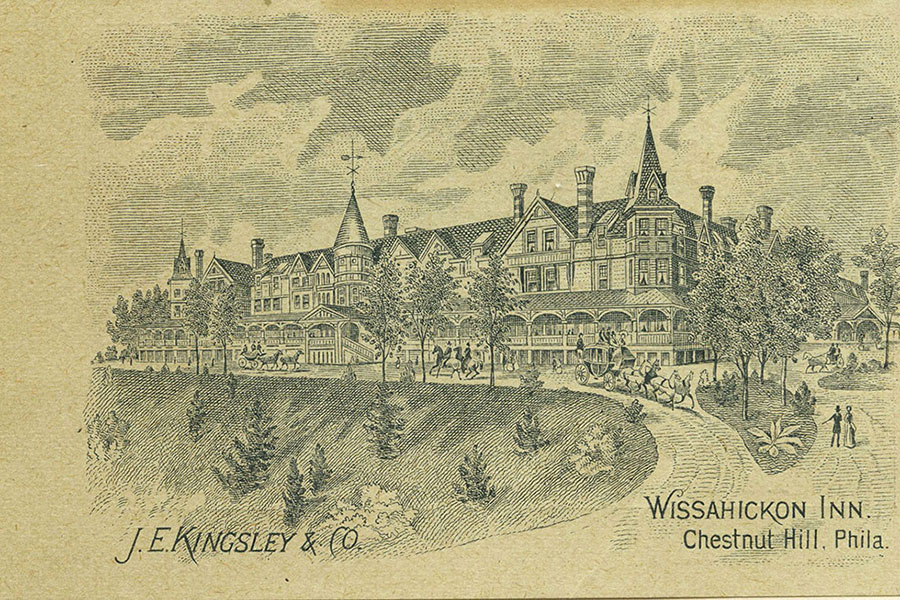
The Wissahickon Inn was a popular spot for catfish and waffles / Illustration courtesy of the Free Library of Philadelphia
At the time, catfish were incredibly abundant, so much so that they were said to “blacken the narrow passages of the river.” (The name of the Wissahickon is, after all, a combination of two Lenape words: “wisamickan,” meaning “catfish creek,” and “wisaucksickan,” meaning “yellow-colored stream.”) The whiskered bullheads were so plentiful that Godfrey Schronk, a famous fisherman of the time, said it wasn’t unusual to catch 3,000 in a single night near the Falls of the Schuylkill (now referred to as East Falls). In his Annals of Philadelphia, published in 1850, writer John Fanning Watson mentioned that he’d seen men catch so many in one scoop of a dip-net that they were “unable to lift them in the boat.”
The dish has since been forgotten by Philly’s collective consciousness. Pollution of our rivers and streams, overfishing, and taverns closing due to strict Prohibition liquor laws caused the Wissahickon Supper to fall out of vogue.
Though catfish may not be as plentiful in our local rivers and streams, Rex at the Royal has come up with an unconventional and sustainable way to give diners a taste of this culinary history: serving up the invasive blue catfish.
“If You Can’t Beat ’em, Eat ’em”
Introduced decades ago from the Mississippi River basin, blue catfish are a menace to the Chesapeake Bay. Some catfish are native to the waterways of Maryland and Virginia, but this particular species is devouring everything in sight, from blue crabs to striped bass. There has even been a report of a blue catfish eating an entire wood duck.
The lack of predators and their high reproduction rate make controlling their population difficult, and their insatiable appetite is wiping out food sources that native species rely on at an alarming rate. And now they’re making their way to the Delaware River, which could bring ecological mayhem to our local waters.
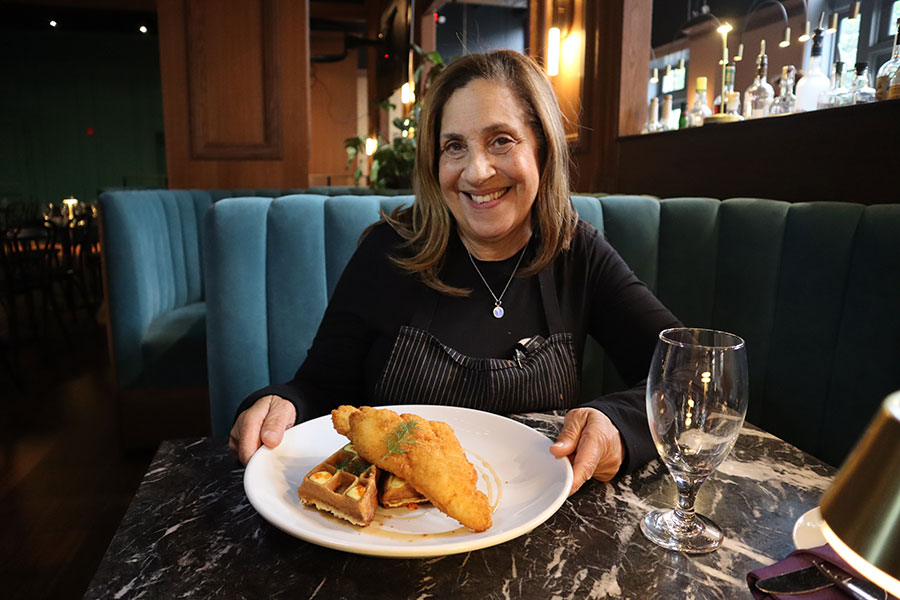
Chef Angie Brown, culinary director of Rex at the Royal / Photograph by Kae Lani Palmisano
One mitigation strategy the Maryland Department of Agriculture recommends is eating them — a sustainable solution that’s part of a growing philosophy that “if you can’t beat ‘em, eat ‘em.”
Over the past couple of years, Samuels Seafood Co. has been taking up the cause. “We started working with a producer who is really trying to make big strides in eradicating the population in conjunction with the Maryland Department of Agriculture,” a spokesperson for Samuels Seafood Co. tells Foobooz over the phone. “It’s very important to help preserve not only the native species that are there and the ecosystem, but also the livelihoods of the local fishermen.”
Rex at the Royal, which sources seafood from Samuels, served roughly 100 pounds of blue catfish this past summer, all of it used for their updated take on the Wissahickon Dinner. It’s a fitting homage to an almost-200-year-old staple. The fried catfish’s crispy exterior gives way to tender flakes of buttery white meat, complemented by quarters of a thick cornbread waffle dotted with corn custard, topped with trout roe, and drizzled with sage syrup. Chef Brown hopes her version sparks a renewed interest in the historic dish. “Fashion is evolutionary; so is food,” she says. “What was good in the 1800s is good now in [2025].”