Insider Tips for Philly’s Biggest Landmarks
Expert hacks for the things everyone is trying to see (or should try to see) this summer
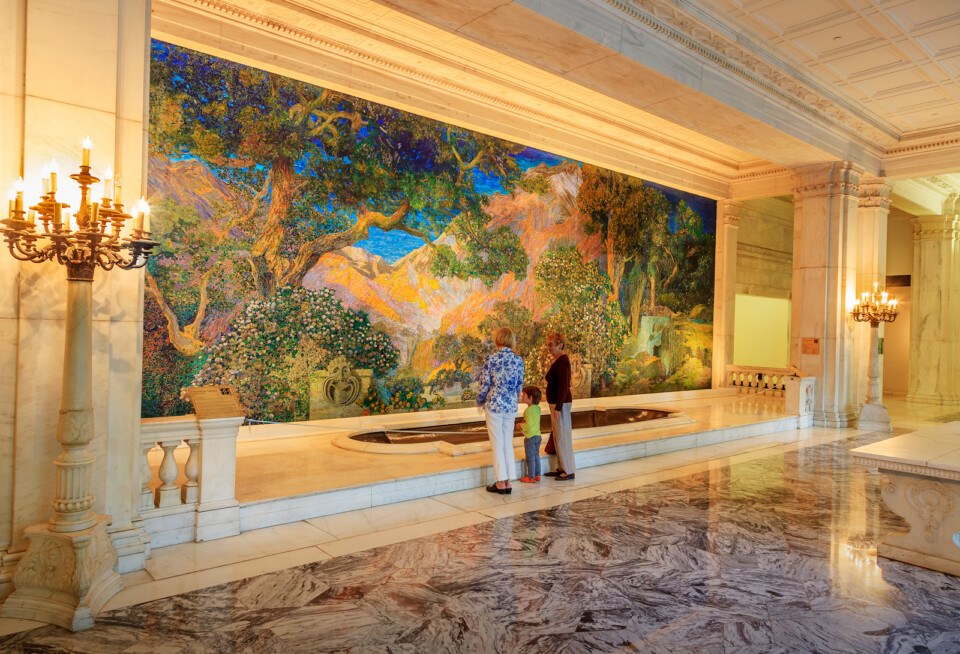
The Maxfield Parrish and Louis Comfort Tiffany mosaic in the Curtis Building / Photograph by G. Widman for Visit Philly
Sure, you can simply show up and snap a photo. But Philly’s iconic landmarks reward a little strategy. From the best times to visit to hidden details most people miss, these expert tips will help you experience the city’s historic heavy-hitters in smarter — and often more meaningful — ways.
1. Independence Hall
Yes, get the tickets (they’re free!) to go inside Independence Hall, where the Declaration was adopted and the Constitution was debated and signed. But first, Cara Schneider Bongiorno of Philly History Pop Ups suggests, stand across Chestnut Street to read the engravings in the ground. They reveal what many miss: This isn’t just one famous building, but a small civic hub — three structures (repping executive, judicial, and legislative branches!) connected by porticos. Don’t skip the tour inside Congress Hall, where one of the country’s most radical ideas — the peaceful transfer of power — became real. Afterward, offers Rebecca Fisher, co-founder of Beyond the Bell Tours, dip into the Curtis Building (original home to the Curtis Publishing empire) across 6th Street for a bit of air-conditioning, and to see the jaw-dropping mosaic by Maxfield Parrish and Tiffany Studios — “an iconic piece most tourists miss, simply because they don’t know it’s there.”
2. Independence Hall (at Night)
Independence After Hours offers rare evening visits this summer, wherein small groups can watch the Founding Fathers debate the future of the country in, yes, the room where it happened. Tickets, available through August 29th at historicphiladelphia.org, are capped at 30 people per night — and the evening ends with a toast at a nearby pub.
3. The Liberty Bell
This enduring symbol of freedom costs nothing to visit, but lines build quickly. To whittle your wait, do what Amy Needle, the president and CEO of Historic Philadelphia, Inc., does: Get there early (opening is 9 a.m.); if you’re with someone, take turns stepping away to explore the adjacent President’s House site. Or skip the line entirely: Head to the corner of 6th and Chestnut, where the bell is highly visible from the outside, framed beautifully in the large window.
4. The President’s House
This open-air memorial marks the site where Presidents George Washington and John Adams lived and worked from 1790 to 1800; Bongiorno calls it “the most important site right now” in Independence National Historical Park, given the continued fight over the feds’ removal of the interpretive panels about slavery. Don’t miss the glass viewing area into the underground foundation, where you’ll see the rounded base of Washington’s parlor window — a precursor to the bay window in the White House.
5. Carpenters’ Hall
Oft overlooked, this place hosted the First Continental Congress, then served as the temporary home of the First Bank of the U.S., and, as Needle notes, was also the site of the country’s first bank robbery. Eschew the rote walk-by in favor of this summer’s Cocktails and Congress Friday nights, running through August 28th. Here, you’re dropped into 1774, with short scenes evoking the First Continental Congress — the debates, tensions, and competing visions that helped set independence in motion, but with cocktails and snacks.
6. Franklin Court
Bring a postcard to this first official post office in the country (initially managed by — who else? — Ben Franklin) and they’ll hand-cancel it with a historic-style stamp.
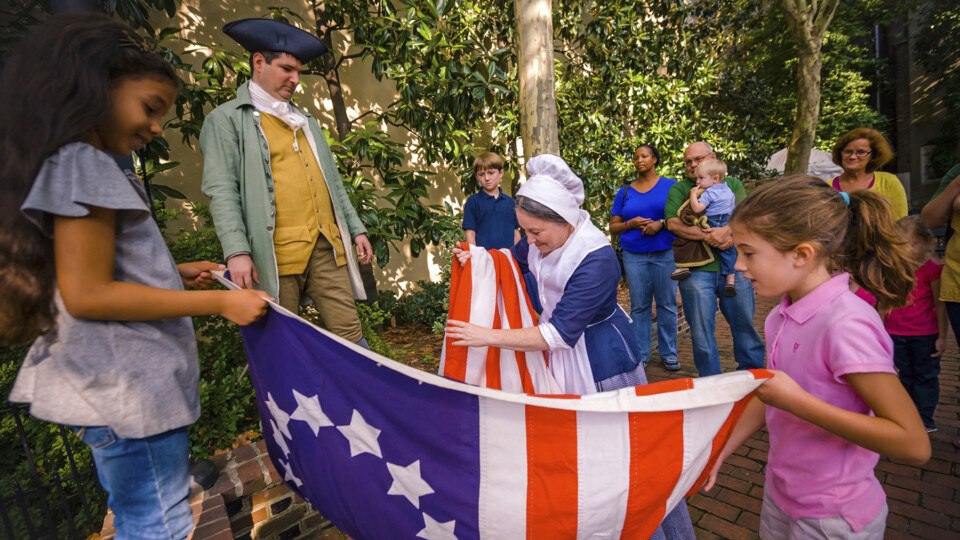
Betsy Ross House / Photograph by M. Kennedy for Historic Philadelphia, Inc
7. Betsy Ross House
To really milk your visit, go for the 10 a.m. flag raising with Ross herself. The house offers this ceremony from Memorial Day to Labor Day — a short, free ritual that often draws children and veterans, Needles says. Inside, interpreters trained in 18th-century sewing techniques demonstrate work in the country’s only operational historic upholstery shop. Afterward, suggests Fisher, go for a lemon bar at Tartes across the street — “a cute and tiny bakery nestled in amongst a changing city.” You can eat it on a bench at the Arch Street Meeting House at 3rd and Arch, a hidden oasis amid Old City’s bustle.
8. Christ Church Burial Ground
Everyone tosses a penny onto Benjamin Franklin’s grave, as should you. Then go spend the $10 to actually tour the church — it’s worth it, Bongiorno says (“and I don’t normally feel the need to tour churches”), as you’ll see George Washington’s pew, William Penn’s baptismal font, and the gorgeous Palladian window, plus “hear stories of how the church was pretty much in step with the birth of the country.”
9. City Hall
“Take the tower tour,” Bongiorno says of City Hall, the massive masonry landmark crowned by Alexander Milne Calder’s William Penn statue. (Tickets are $16; book in advance through the Philadelphia Visitor Center.) The tour, still something of a Philly secret, offers unforgettable panoramic city views and a closer look at the artist’s 250-plus stone and bronze sculptures. No tickets available? Make it a cocktail instead: Take the glass elevator to SkyHigh, the Four Seasons’ 60th-floor lounge, for sweeping city views … and a highball.
10. Mother Bethel African Methodist Episcopal Church
The mother church of the African Methodist Episcopal denomination and a key station in the Underground Railroad is Bongiorno’s own personal must-visit. The museum downstairs includes the tomb of founder Richard Allen, who, along with Absalom Jones, had been permitted to preach at St. George’s Methodist Episcopal Church in 1786, but only early in the morning, before white congregants arrived. They eventually walked out and founded separate movements — and Allen’s became the AME Church.
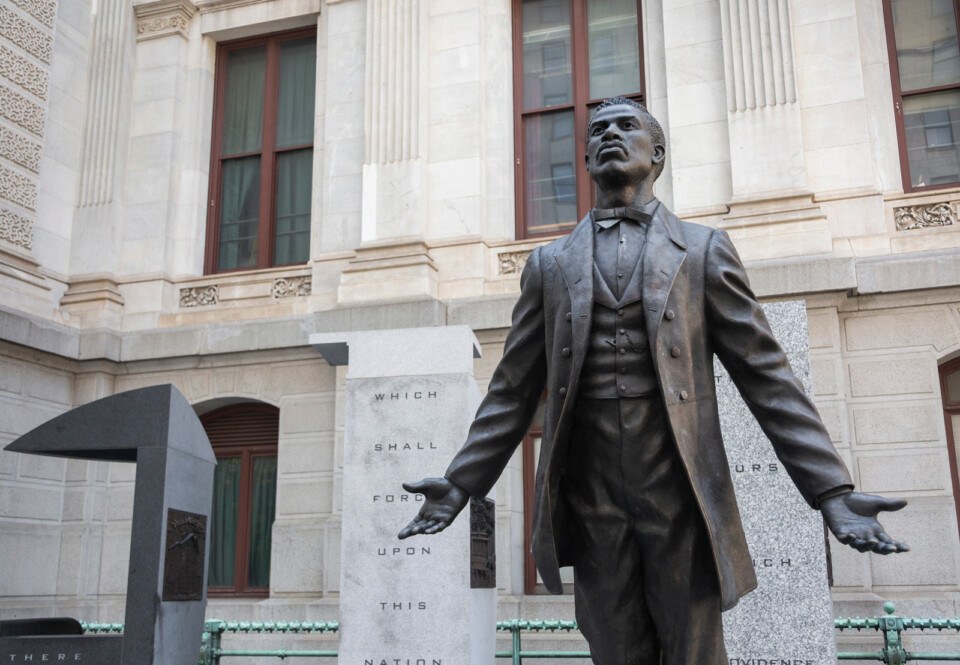
The Octavius Catto sculpture / Photograph by E. Frizzelle for Visit Philly
11. Three monuments
Get a fuller American story with these statues: On the south side of City Hall, look for the Octavius Catto sculpture (shockingly, Philly’s first monument dedicated to an individual Black man, erected in … 2017), which honors the educator, athlete, and voting-rights advocate killed on Election Day in 1871 — the first one in which Black men were allowed to vote. Over at Front and Market, you can view the majestic bronze Chief Tamanend sculpture, memorializing the Lenni Lenape leader who welcomed William Penn in 1682 (it went downhill for the Lenape not long after that), while at Front and Spruce, you can contemplate (so many of our) immigrant histories, particularly those of Americans forced to emigrate from their homelands, at the poignant Irish Memorial.
12. Once Upon a Nation Storytelling Benches
From Memorial Day to Labor Day, visitors can hear a short, site-specific story from each of the 12 benches scattered around historic Philadelphia — from the Grimké sisters’ anti-slavery work near Arch Street Meeting House to the nation’s first bank robbery at Carpenters’ Hall. It’s an easy way to make the landmarks feel less static, especially for kids.
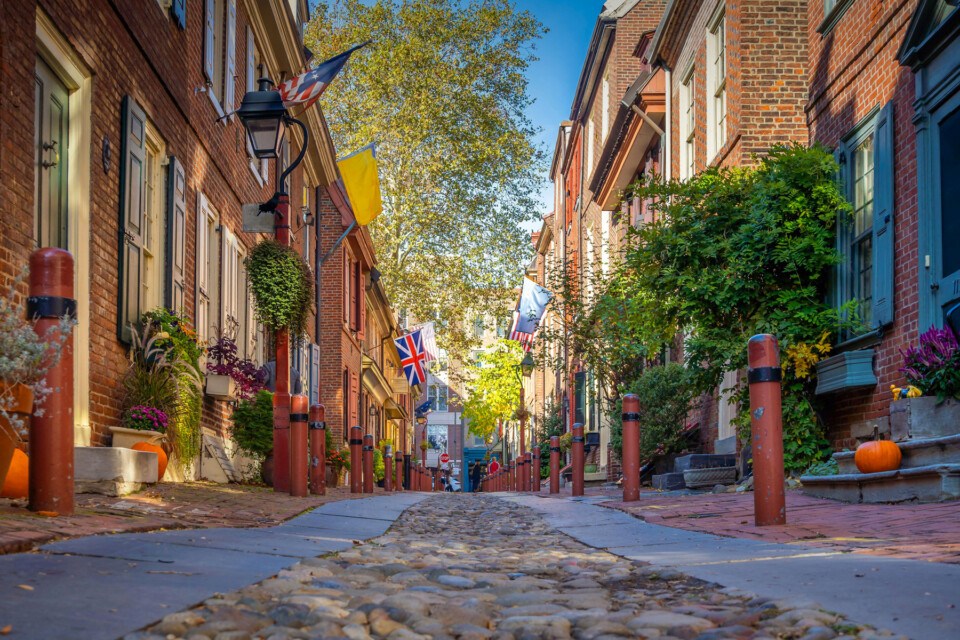
Elfreth’s Alley / Photograph by Wasin Pummarin/Alamy Photo
13. Elfreth’s Alley
Go early in the day if you want the uncrowded, postcard pics of Elfreth’s Alley, that tiny, famous Old City lane lined with 32 private homes dating back to the 18th century — the oldest continuously inhabited residential street in the U.S. If the block is packed, take your quick walk and then wander south toward Headhouse Square and Stamper Street for another classic Philadelphia tableau — same vibe, great pics, no crowds.
>> Click here to return to The Savvy Local’s Guide to Touristy Philadelphia
Published as “The Big Landmarks” in the July 2026 issue of Philadelphia magazine.