Paul Offit vs. RFK Jr. Is the Battle of Our Times
How Philly's leading vaccine doctor became MAHA's public enemy number one
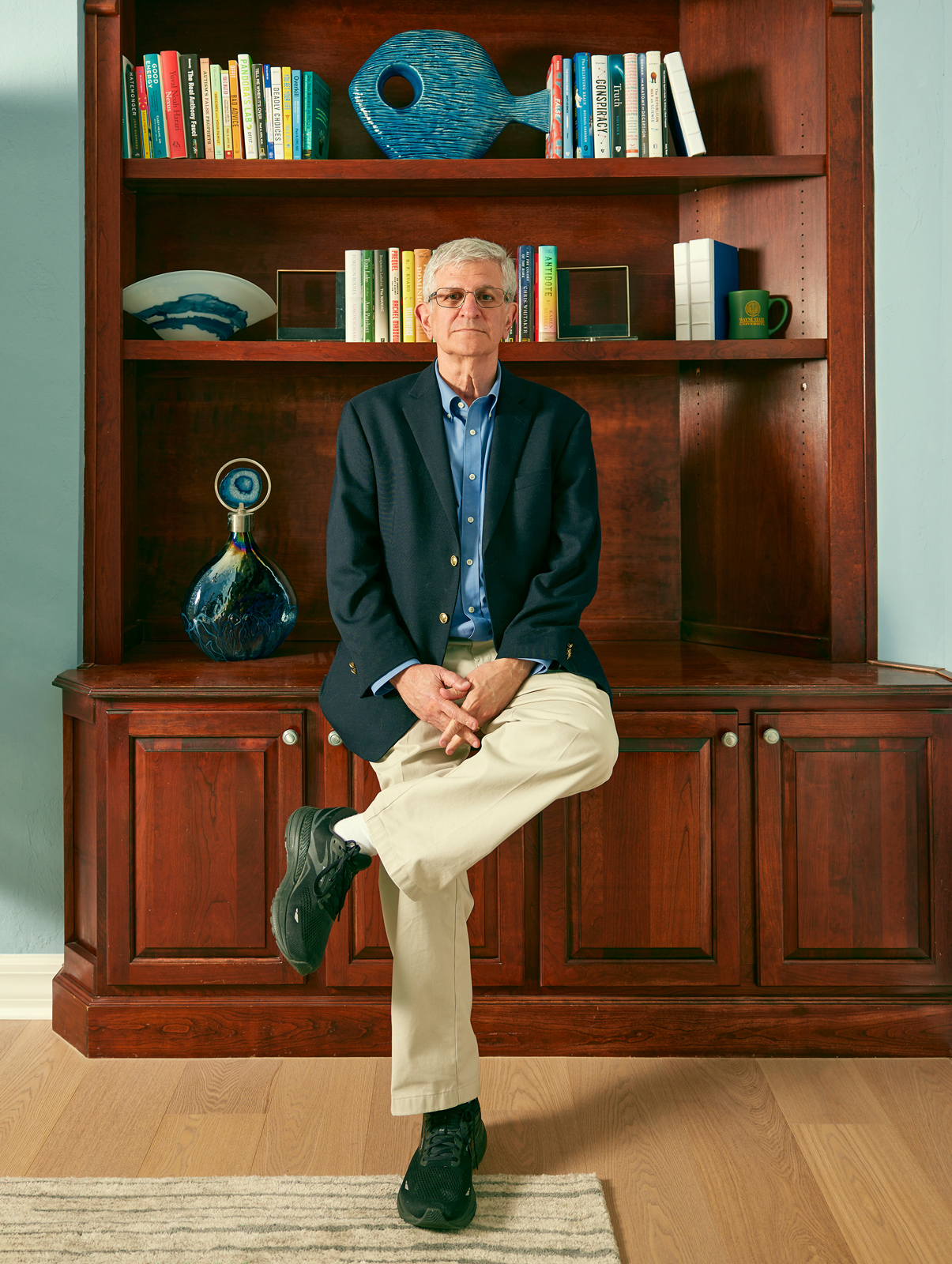
Paul Offit / Photograph by Mary Beth Koeth
Listen to the audio edition here:
Paul Offit was thrilled.
It was 2005, and the Children’s Hospital of Philadelphia immunologist had just gotten off the phone with the son of one of his heroes, Robert F. Kennedy. The two men, Offit and RFK Jr., had spent an hour talking about science — specifically, the science of vaccines. According to Kennedy, several mothers had called him concerned about the safety of the vaccines their children were receiving, and, he told Offit, he wanted to better understand how they worked.
Offit was exactly the man to ask: A pediatrician, he had spent the past two decades researching a vaccine for rotavirus, a devastating stomach ailment that, at the time, killed 5,000 infants worldwide every day. He was also a professor of pediatrics at the University of Pennsylvania’s medical school, and had helped launch and run CHOP’s Vaccine Education Center, becoming a nationally recognized source of information about the science behind immunizations. As Kennedy later recounted, when he called the National Institutes of Health for answers to his questions about vaccine safety, they referred him to Offit.
Offit started the conversation by quoting his favorite line from the older Kennedy’s memoir about the Cuban Missile Crisis, Thirteen Days: “The lowest reaches in hell are reserved for those who, in times of moral uncertainty, are ambivalent.” The men then spent the rest of their phone call talking about thimerosal, a vaccine preservative that had been falsely linked to autism in children. As Offit explained to Kennedy, the study that had linked thimerosal and autism had been truly and definitively debunked. Not only that, but thimerosal had been removed from all childhood vaccines in 2001. And there had been years of research, first in Europe and then in the United States, that further found no basis for the belief — which, alarmingly, seemed to be growing — that doctors like Offit were harming children more than healing them by inoculating them against diseases like polio, measles, and mumps.
Offit thought the call went well — so well that he later joked with his wife that he fully expected he’d soon be tossing a football around the Kennedy compound.
Instead, a few months later, RFK Jr. recounted their conversation in an article he wrote for Rolling Stone titled “Deadly Immunity,” in which he attacked Offit and others like him as government agents who had “colluded with Big Pharma to hide the risks of thimerosal from the public.” Offit’s motivation, according to Kennedy? Money. He wrote that the doctor was driven by a payout he would get from selling his rotavirus vaccine.
In actuality, Offit’s vaccine doesn’t include any thimerosal. It wasn’t on the market yet when the article came out; it hadn’t even been approved by the FDA. Furthermore, Offit himself was an employee of CHOP and the Wistar Institute, so when, a few years later, Merck Pharmaceuticals bought the vaccine, RotaTeq, for $182 million, the money went to the institutions. Offit received what he calls a onetime “generous bonus” in 2010. But none of that was foretold or apparent in 2005. And, he maintains, money has never been the point of his work.
Rolling Stone — and Salon, which had also run the piece — eventually retracted the article, which was riddled with falsehoods and inaccuracies. But it was too late: To thousands of Americans, Offit was, and is, a villain. He got hate mail. (He gets even more now.) He and his two children have received death threats, some that have prompted the FBI to investigate. He’s been doxxed, with his personal information distributed on the web. Meanwhile, RFK Jr. has spent the past 20 years repeating the same claims, including in 2023, when he ran for president on his Make America Healthy Again agenda, using Offit as the target of and stand-in for his disdain of the pharmaceutical industry in conversations with the likes of Joe Rogan and Tucker Carlson and their millions of viewers.
“He made me a bad guy,” Offit told The Philadelphia Citizen last fall. “But I honestly don’t think anybody is going to kill me. I certainly don’t think they’ll give me a heads-up first. They just want me to shut up.”
“And,” he added, “fuck them.”
Paul Offit can’t shut up. The stakes are too high. Especially now, when RFK Jr. and his anti-science cronies are in charge of our nation’s public health system, which oversees everything from federal research funding to drug approvals, pandemic planning, Medicare/Medicaid, and much more. What was once a vocal but fringe element of American society is now in charge, and the consequences for our nation’s health and wellness — not to mention trust in our public health authorities — are headed toward catastrophic.
Just take a look at one example: Twenty-five years after measles was declared eliminated from the United States, last year saw a resurgence, with some 3,000 cases nationwide officially reported. Two unvaccinated children died in West Texas — the first children to die of measles in a decade — and this year several outbreaks have led to at least 1,000 cases, compared to about 125 at this time in 2025. We are, in short, on the verge of reversing the elimination status that took decades to achieve — which means we may also be on the verge of once again living with the devastating consequences of an incurable disease that can lead to pneumonia, brain swelling, deafness, and death.
What’s more, it’s our top public health official driving us there. RFK Jr. is not a doctor or a scientist; he disdains the doctors and scientists most of us have come to trust with our nation’s health, including many of those who work for him at the Centers for Disease Control and Prevention (which he has referred to as a “snake pit”). His aversion to proven science seems to be at odds with what had been his life’s mission for decades as a righteous defender of our planet, a lawyer fighting — and beating — major polluters by using science to show the harm companies like Monsanto have done to the earth.
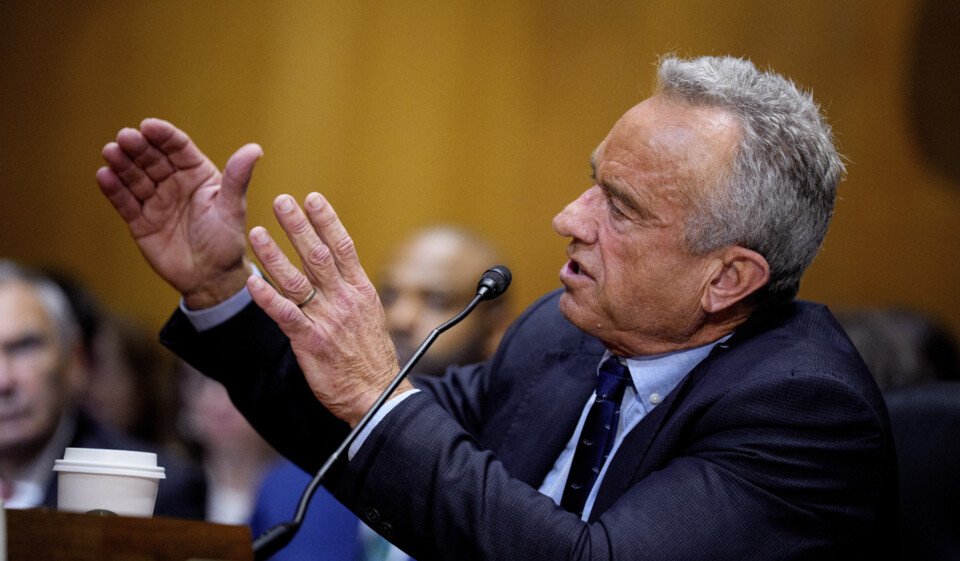
RFK Jr. testifies before the Senate in September 2025. / Photograph via Getty Images
But Kennedy’s obsession with vaccines came about in the same way many American parents’ did: According to a 2024 Vanity Fair article, when his son Cody developed allergies to peanuts and soy, Kennedy blamed mercury poisoning, which he alleged came from the shots Cody got when he was a baby. It didn’t matter to him that there is no proven link between mercury and those allergies.
Way before that, of course, was a long, complicated history. Kennedy was 14 in 1968 when his father was assassinated. A year later began a drug addiction that lasted nearly 15 years — a fundamental part of the story he tells about himself, from his daily AA meetings to his recent assertion that he’s not “scared of a germ” because he “used to snort cocaine off of toilet seats.” Kennedy got clean in 1983. Now, as part of his anti-aging routine, he takes testosterone supplements, a steroid with questionable benefits for most men, and enjoys artificial tanning, which can cause skin cancer. Somewhere along the way, he says, he also got a “brain worm” that ate part of his brain, leading him to claim in divorce court that he had diminished earning capacity. (His second wife, Mary Richardson Kennedy, who reportedly referred to RFK Jr. as a sex addict who’d had multiple affairs, hanged herself before the divorce was final.)
Kennedy is also among the most popular members of President Donald Trump’s cabinet, according to a Gallup poll from last summer, when 42 percent of those surveyed had a favorable opinion of him, about on par with the president. That could conceivably bode well for the once (and future?) presidential candidate — but not necessarily for our country’s health and well-being.
As Offit put it late last year in his Substack, Beyond the Noise:
This year alone, the United States has suffered the largest measles outbreak in more than 30 years, an influenza death rate for children bigger than anything we’ve seen since the 2009 swine flu pandemic, and far more whooping cough cases and deaths in babies than in previous years. Nonetheless, RFK Jr. saw this as exactly the right time to tell us that vaccines don’t save lives. Frankly, the most frightening moment on his video occurred at the beginning when he said, “Hi, I’m Robert F. Kennedy Jr., your Secretary of Health and Human Services.”
Nearly 30,000 people subscribe to Beyond the Noise, which chronicles the state of our country’s health and the propagation of junk science under RFK Jr. (Offit says he gains 50 new subscribers a day.) This has become his crusade, his life. He is a go-to expert, saying yes to every news outlet, every podcast, anyone who asks him to speak about vaccine science and safety. He no longer does research or sees patients. He continues to teach and write books — forthcoming is Nobel Delusion, about whom to trust when our experts give us dangerous advice — and co-directs CHOP’s Vaccine Education Center, which he co-founded in 2000 to combat the burgeoning anti-vax movement.
None of this is to say, however, that Offit just unquestioningly toes the pro-vaccine line. He is not compelled by politics — although politics has found him — as much as by the search for scientific truth. In 2002, he was the sole dissenter on the Centers for Disease Control and Prevention’s Advisory Committee on Immunization Practices when President George W. Bush wanted frontline workers to get the smallpox vaccine as a precaution against a bioterrorist act. Offit’s argument — that because a small percentage of people get sick and die from the smallpox vaccine it was too dangerous to give to 450,000 U.S. workers — landed him on Dan Rather’s 60 Minutes II.
Twenty years later, he was one of two dissenters when the FDA’s vaccine advisory committee recommended universal COVID boosters, stating publicly that not everyone needed to receive the additional dose. That particular view made him some enemies on the other side of the ideological spectrum. And he has — as he did in his 2024 book, Tell Me When It’s Over: An Insider’s Guide to Deciphering COVID Myths and Navigating Our Post-Pandemic World — admitted that the public health community has not always made the right decisions or sent the right messages to the American people.
In other words, Offit demonstrates what we need most (and more of) at this moment: courage to stand up for what’s right in the face of an incredible amount of pressure to back down. (That’s why The Philadelphia Citizen — Philly Mag’s sister publication — has named Paul Offit its Citizen of the Year for 2026.) Compare that to any number of elected and unelected officials in our public sphere who refuse to push back against the tyranny and idiocy in our midst, from the law firms and media companies that have caved to Trump to the politicians who refuse to call for the rule of law to those who have stepped away from the fray.
“No one is braver, no one has more guts, no one has more willingness to get in there and not be bullied or told off by anybody,” says New York University bioethicist Art Caplan, who has known Offit for more than 25 years, since both worked at Penn. “I know plenty of scientists who said, That’s it, I’m going back into the ivory tower. Not Paul.”
Anti-vaxxers, as Offit points out, have been around as long as there have been vaccines, starting in 1796 when English physician Edward Jenner created the first inoculation against smallpox, which even pitted pro-vax Benjamin Franklin against his older brother in Boston. But Offit attributes the modern anti-vax movement to a 1982 TV documentary called DPT: Vaccine Roulette, which Offit says showed children “with withered arms and legs, drooling, seizing, looking vacantly at the sky, with bicycle helmets, and the parents all said the same thing: My child was fine. They got the whooping cough vaccine, and now look at them.”
That led to congressional hearings about vaccines and, within three years, $3.5 billion in lawsuits against vaccine makers, which drove most of them out of the business. (Offit contends that the juries found in favor of plaintiffs despite the science proving vaccines caused no harm.) “We went from having 18 companies that made vaccines to five,” Offit says. In 1986, the Reagan administration implemented the National Childhood Vaccine Injury Act, which included the Vaccine Injury Compensation Program to cover the costs of most vaccine-related lawsuits in the future. “That stopped the bleeding, but I think that was the start of distrust,” Offit says.
For a measure of how far we’ve fallen, just consider: In 1955, the year Jonas Salk invented the polio vaccine, 80 million Americans — roughly half the population — donated money to the National Foundation for Infantile Paralysis (now the March of Dimes), which later oversaw the distribution of the vaccines. That’s how much Americans believed in and held out hope for the science. Up until then, some 16,000 Americans (mostly children) contracted the debilitating virus every year, with more than 3,000 dying in 1952; there was no cure, just — for those unlucky enough to need hospitalization — painful treatments that still left many paralyzed. By 1961, the number of polio patients in the U.S. had fallen to 152. “It was an absolute celebration,” says Caplan. “People were so grateful, and Salk became a hero.”
In this century, polio was all but eradicated around the world, thanks to Salk’s vaccine. But — as with vaccines for other diseases that ran rampant for generations — that has proven to be both a boon and a bane. “Vaccines are victims of their own success,” says Offit. These days, most parents have no memory of the days when polio left one in 200 patients paralyzed, or when babies were born with defects because their mothers had rubella, or when 48,000 people per year would end up in the hospital with measles. Even many doctors today haven’t encountered these illnesses. “That’s part of why people are not compelled enough by the diseases being prevented,” Offit says. “They haven’t seen them, which means they’re more likely to be influenced by misinformation.”
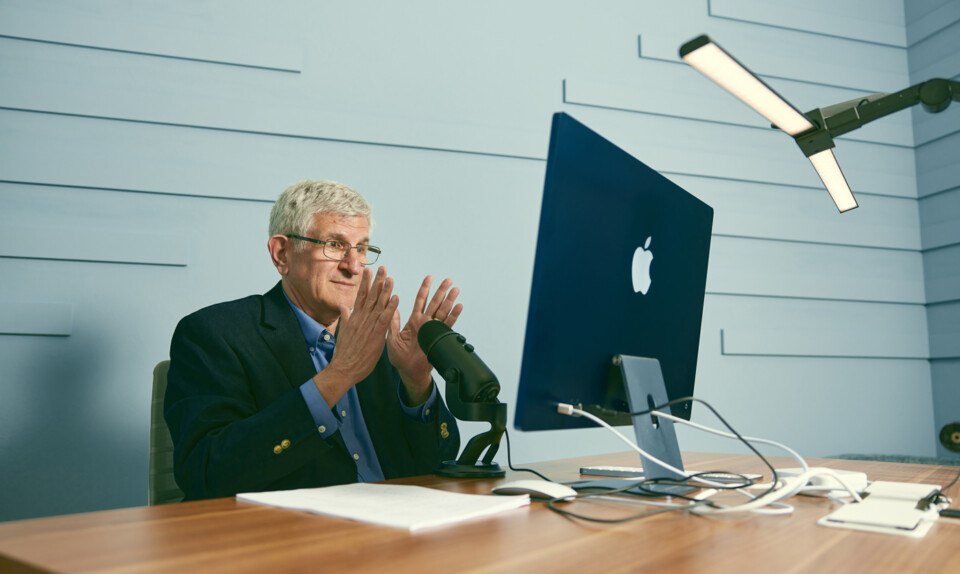
Paul Offit in February at his Florida home / Photograph by Mary Beth Koeth
Offit, who is 75, has seen plenty, and remembers it all vividly. After a botched foot surgery when he was a child in Baltimore, he spent weeks in a polio ward with other children, many in iron lungs and screaming with pain from the burning rags nurses applied to their limbs in an attempt at treatment. His mother was on bed rest for a difficult pregnancy; his father was a traveling salesman, mostly out of town. Offit recalls peering over the edge of his bed, out a small window into the lobby, hoping for someone to visit, or take him home. “That was a traumatic experience,” Offit says. “I really think the scars of your childhood make for the passions of your adulthood. Mine comes from defending that little boy in the hospital.”
As a resident at Children’s Hospital of Pittsburgh, he saw hundreds of babies with rotavirus, including one who died, at a time when it was the most common killer of infants and young children in the world. In 1991, he was at CHOP when he watched through an ICU window as some measles patients slowly and painfully died — drowned, essentially, in their own fluids. None of those children, Offit came to learn, had been vaccinated.
By that time, Offit had already embarked on what would become his greatest professional accomplishment: researching and developing, over 25 years, the RotaTeq vaccine, alongside Stanley Plotkin and H. Fred Clark, at CHOP and the Wistar Institute. Since hitting the market in 2006, RotaTeq has prevented some 70,000 infant deaths a year, not to mention tens of thousands of hospitalizations. You would think that would make Offit, like Salk, a hero. Instead, it has turned him, in certain circles, into a pariah — or, as the anti-vax crowd puts it, a “biostitute,” someone in the pocket of Big Pharma.
But here’s the thing about making vaccines. It’s hard. It takes perseverance and grit and the ability to convince people — funders, colleagues, pharmaceutical companies, federal health officials — that you are getting somewhere, even when there are setbacks in the research, or you have to change direction. Offit stuck with it, motivated by the patients he continued to watch fall ill with rotavirus. “Paul knew they could shut it down at any time,” says Charlotte Moser, who has worked with Offit since 1992, first in his lab and now as co-director of the Vaccine Education Center. “So the fight has always been part of him.”
Offit is not unsympathetic to parents’ fears. He is a parent and grandparent himself; he gets that it’s a leap of faith for people to allow their children to be injected 25 times within five years with “biological fluids that they don’t understand” to prevent 14 different diseases. And he acknowledges that there is, indeed, some risk to some people who receive vaccinations — and, even, that vaccines can be improved.
One of Offit’s first moves when he was appointed to the CDC’s Advisory Committee on Immunization Practices in 1998 was to take the helm of the polio working group to change the way American children received the vaccine. From its earliest days, the polio vaccine was administered orally — and it worked, helping to eliminate natural polio in this country by 1979. But in very rare cases, the vaccine caused polio, leading eight to 10 children (or one of every 2.4 million doses) to become paralyzed every year. Despite pushback from members of the committee, Offit persuaded the CDC to instead authorize the costlier polio injection, which does not carry the same risk of infection, and which children born over the past two-plus decades have received. (There have been no cases of paralytic polio in the U.S. in more than 30 years.) It is, he says, his proudest career achievement after inventing the RotaTeq vaccine.
That same year — 1998 — Andrew Wakefield, a British former senior surgeon, published the now-infamous paper that falsely linked the MMR vaccine to autism, supercharging the modern anti-vax movement with parents desperate for answers to their children’s neurodivergence. (The Lancet, which published Wakefield’s findings, eventually retracted the paper, after multiple studies debunked it.) As with the DPT scandal in 1982, Wakefield’s paper seemed to support what parents felt was true, even if the science disproved it: Their child received an MMR vaccine and shortly thereafter started missing developmental milestones, eventually leading to a diagnosis of autism spectrum disorder. (In fact, although Wakefield cited mercury as the offending ingredient, the rate of autism actually increased when it was removed from the MMR shot.)
As a member of ACIP, Offit witnessed science being ignored in decisions around vaccines, as when members of the advisory committee were forced to vote on whether or not to break up the MMR vaccine, as Wakefield (unscientifically) suggested. (They voted no.) That — and the fact that parents had started showing up at meetings angry about what they thought were harms caused by vaccines — prompted him, in 2000, to launch the Vaccine Education Center despite, Moser says, fellow scientists warning them they were throwing their careers away by stepping out of the lab and into the world of information.
“Paul sees an injustice when children are sick,” says Moser. “That’s why he went into pediatrics, and why he wants to do what he can to alleviate that suffering. He became aware that families had concerns and questions about vaccine safety that had scientific answers they weren’t hearing anywhere else, so he felt like we needed to step in.” (Moser was among the 17 ACIP members fired last June, part of RFK Jr.’s sweeping changes to the vaccine advisory bodies.)
For about two decades after that, Offit felt like they were making headway. The vast majority of Americans supported widespread vaccine protocols; most parents understood that the risks from diseases like measles and whooping cough were far worse than any risk associated with vaccines. Diseases long held at bay were still held at bay, and while pockets of anti-vax sentiment kept Offit busy, the loudest voices on the subject of vaccines and autism were mostly fringe figures, at least in terms of health, like actress Jenny McCarthy, her then-boyfriend Jim Carrey, and an environmentalist with a famous name and a checkered past: Robert F. Kennedy Jr.
And then came COVID.
In 2020, Offit was in the middle of his first four-year term on the FDA’s vaccine advisory committee, and among those tasked with deciding how America should respond to the virus raging around the world. That response included Operation Warp Speed, an accelerated research program that led to a vaccine within 11 months after the virus first appeared on American soil. In the first seven months of 2021 — after an estimated 697,000 Americans had died from COVID, with 3.5 million hospitalized and more than 100,000 schools shut down — 70 percent of eligible Americans received at least one dose of a COVID vaccine, an astonishing number when you consider the size of our population. “There was really no infrastructure to mass-vaccinate adults,” Offit notes, “but we did it nonetheless.”
But, he adds, the government’s directives during and just after COVID contributed to the moment we’re in now. In retrospect, Offit has come to see many of the public health decisions as overly proscriptive and top-down; he says government officials should have included more American citizens in the decision-making process. “You couldn’t go anywhere without your vaccine card — to your favorite bar or restaurant or sporting event. You could be fired from your job, may not be able to have a wedding, it was this massive government overreach and we just leaned into this libertarian left hook,” Offit says. “Anti-vaccine activity never had a political affiliation before. This became about getting government off my back, and made it partisan.”
“I’m glad I’m getting in RFK Jr.’s head. He’s an evil, evil man, and I have such hatred for him. I will do everything I can every day to hold up to the light what he is doing to America’s children.” — Paul Offit
The biggest consequence of all this? The rise of the so-called “medical freedom” movement and of RFK Jr., who was confirmed as head of the Department of Health and Human Services shortly after President Trump took office for the second time in 2025. Offit was among those who vociferously called on Congress to vote Kennedy down, including in an open letter to GOP Senator Bill Cassidy, a doctor, with whom Offit says he spoke personally to convey his concerns.
Those concerns have been borne out. Last year, after firing all the members of ACIP, Kennedy appointed as its new chair pediatric cardiologist and science skeptic Kirk Milhoan, who — despite the fact that there is no treatment for measles, among the most contagious viruses out there — has downplayed the need for widespread vaccination. “It’s been very important to us, the members of the committee, that what we were doing is returning individual autonomy to the first order, not public health, but individual autonomy to the first order,” Milhoan said on the podcast Why Should I Trust You?
“This is where we are now,” Offit retorts. “If you decide you don’t want to get a measles vaccine because you believe that the risks are greater than the risk of measles, and that ends up hurting another child — even if that child couldn’t be vaccinated because they were compromised — that’s okay. Not only is it okay, it’s laudable. That’s at the heart of what Milhoan is saying.”
Offit is not particularly bothered by his firing, in September, from the FDA’s vaccine advisory committee, or by the fact that Kennedy seems weirdly obsessed with him. “I’m glad I’m getting in RFK Jr.’s head,” he says. “He’s an evil, evil man, and I have such hatred for him. I will do everything I can every day to hold up to the light what he is doing to America’s children.” That’s what bothers him — what keeps him up at night. It’s what he foresees: more disease. More pain. More death — of children, those he has spent his life caring for. “I feel like we’re falling off a cliff in slow motion, and nobody in power is saying anything,” he says. “Where the fuck is Congress? Where the fuck is everyone standing up to RFK Jr.?”
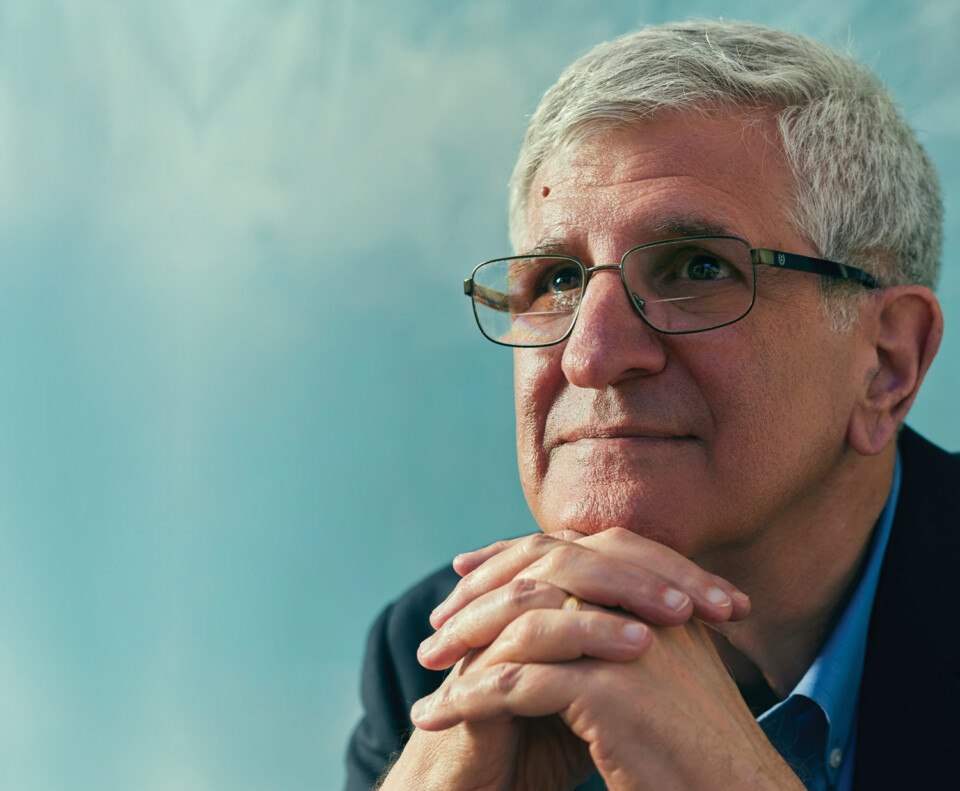
Paul Offit / Photograph by Mary Beth Koeth
Offit can no longer just rely on the science to argue his case, as he has for decades; he is — we are — facing larger philosophical questions that his friend Art Caplan says are increasingly a part of Offit’s message. We have laws, Caplan offers, that prevent us from driving drunk or in the middle of the road, from punching someone in the nose, from shouting fire in a crowded theater. Why? Because leaving the house and being among other people means being responsible not just for ourselves, but for the well-being of those around us. This is what Offit grapples with most these days.
“Yes,” Offit says, “people are dying. But there’s also the fact that we’ve just decided we don’t have to care about other people. How did we become a society where we don’t care about each other? That’s pretty devastating.”
Damage to one of the most trusted institutions in America — our public health system — will not be undone easily (which is especially scary given how quickly it has been dismantled over the past year). Even so, Offit is not giving up — which is why he spends his hours, his days, his life now talking about this. Relentlessly. He is an Eagles fan, after all, so — reasonably or not — he has an optimistic streak; he’s able to be hopeful about the future, about reason and science winning out, about outlasting RFK Jr. and this mad moment. Will it take another epidemic to remind people what’s at stake? A congressman’s grandchild dying of measles? Another generation of scientist communicators hammering home what Offit has been sharing for the past 25 years? Perhaps.
In the short term, Offit is encouraged by the knowledge that the majority of Americans support vaccination — including the more than 90 percent of parents who vaccinate their children — and that parents trust their pediatricians, with whom they have a relationship that is deeper and more valued than that with any public official. This year, the American Academy of Pediatrics — which has its own vaccine advisory council — pushed its recommendations to the public, standing firm on the slate of childhood inoculations that Kennedy and his team are trying to dismantle. What the pro-vax camp needs now, Offit says, is a bipartisan mass movement to counter the anti-vaxxers: parents rallying for science, calling their public officials to demand the return of sanity and science in our public health sphere.
This is not really an option, he says. It’s a mandate, if we want Americans to survive.
“Science does stand the test of time,” Offit insists. “I do believe that, even though we are living in an age where people are declaring their own truths, including their own scientific truths. I do believe we’ll get out of this. You pay too big of a price if you don’t.”
Published as “Paul Offit Wants to Save Your Life. RFK Jr. Wants Him Gone.” in the April 2026 issue of Philadelphia magazine.