Last August, in California, I had my first taste of Pinkberry. Maybe you’ve read about this frozen yogurt phenomenon that has Californians and New Yorkers lined up around the block whenever a new store opens. Unlike most super sweet fro-yo (think TCBY), Pinkberry actually tastes like yogurt. It has a tart flavor that pairs well with sweet mix-in options like coconut, granola or even mochi (sweet rice dough).
Returning home, I fell into Pinkberry withdraw. I got really angry at Shelly Hwang and Young Lee, owners of Pinkberry, for overlooking Philadelphia, one of the country’s largest metropolitan areas. I actually wrote them e-mails asking them to consider stores here. (You could drop them a line, too, at info@pinkberry.com, FYI.)
But during the winter, my Pinkberry lust diminished as the temperature plummeted. I put their “swirly goodness” more or less out of my mind until last Thursday, the first day of spring, when Rita’s, our own private regional frozen dessert, gave away free water ice to celebrate the season. As I dug in to my inaugural half chocolate-half mango paper cup, I wondered if I would trade Rita’s for Pinkberry. By the time I got to the bottom of my ice, I realized that I actually prefer our homegrown staple, which I’ve enjoyed all the summers of my life. Let them have their Pinkberry in L.A. and Manhattan. So far at least they have no Rita’s and they don’t even know what they’re missing.
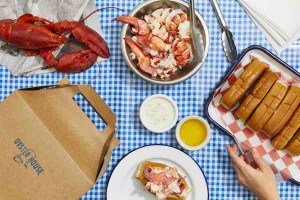
It’s a tough time to be a seafood lover. On a recent trip to Washington D.C., I ate at Hook restaurant in Georgetown. What makes Hook different from other seafooders like our own Estia or Philadelphia Fish & Co. is that Hook serves sustainable seafood only. If it’s overfished or harmful to the environment, you won’t find it on the menu.
That’s a tall order when you consider how many of the dining public’s favorite fish are in the danger zone. Beloved choices including grouper, Chilean sea bass, toro tuna, and farmed salmon (which is to say most salmon) are no longer options if you want to eat ethically. The good news is you don’t need a restaurant to make your choices for you. Visit blueocean.org for a pocket seafood-buying guide. You can print it up and put it in your wallet to make decisions when eating out. It’s a powerful way to let all restaurants know that we want to protect the ocean’s delicate ecosystems. And fortunately it isn’t all bad news: black cod (currently on the menu at Buddakan) and Alaskan wild salmon (currently on the menu at White Dog Cafe) are both tasty options on the OK-to-eat list.
Spring is here, which means asparagus has just about reached the height of its growing season. Next Wednesday, at his bi-weekly Chef’s Table dinner, chef Dan Bethard of West Chester’s Iron Hill Brewery will pay homage to this classic spring veggie with a fresh, not-too-creamy, asparagus soup. He shared the oh-so-easy recipe with us.
1 cup extra-virgin olive oil
1 cup garlic cloves
2 tbsp. unsalted butter
1/4 c. chopped Vidalia onions
1 tbsp. minced garlic
1 lbs. asparagus
3 c. chicken broth
1 c. heavy cream
1 tsp. lemon juice
Kosher salt and black pepper, to taste
2 ounces Parmigiano Reggiano
Preheat oven to 400 degrees Fahrenheit. In an oven-proof pan, combine olive oil and garlic. Cover and bake until garlic is soft, about 20 minutes. Cool. Strain oil, discarding garlic. (Garlic oil can be stored in the refrigerator for up to 2 months.)
Bring a pot of water to a boil. Trim asparagus, removing and reserving asparagus tops. Blanch asparagus spears in boiling water for 45 seconds or until asparagus turn bright green. Remove and plunge into ice water.
In a saucepan over medium heat, melt butter. Add onions and sauté until translucent. Add garlic and sauté 2 more minutes (Do not brown garlic.) Add asparagus spears and chicken broth. Increase heat to bring mixture to a boil. Reduce heat and simmer until the asparagus becomes tender, about 15 to 20 minutes. Using an immersion blender, purée soup until smooth. Add heavy cream and return to a boil. Season with salt and pepper. Strain soup.
To serve, divide soup between six bowls. Top each with shaved Parmigiano Reggiano. 1 teaspoon garlic oil, and several reserved asparagus tops.
Remember the ‘80s, when we feared fat to the point that we requested our restaurant meals cooked without oil or butter? It seems incredible in today’s restaurants where pork belly and lardo are proudly touted in menu descriptions. Of all these over-the-top ingredients, duck fat reigns as the glamour fat. Chefs rely on its rich flavor and unctuous texture to augment pates and terrines and enhance leaner meats and fish.
At Copper Bistro in Northern Liberties, it dresses a pasta dish that’s served along side a duck breast. Other chefs are employing it as a frying medium, especially for potatoes. Bistro 7, Lacroix, and London Grill all give their spuds a dunk in duck fat. The resulting fries are even more decadent than usual, especially at Lacroix where they are finished with a drizzle of truffle oil. As if potatoes needed that much help to be delicious.
Milk, for most people, just is. The only question beyond “Got Milk?” is “Whole or skim?” But as a recent Harrisburg debate proved, there’s nothing basic about the kitchen staple. There are dozens of shades of white: unpasteurized, pasteurized or ultrapasteurized? Grade A or Grade AA? Organic or conventional? From corn-fed cows or grass-fed cows? Produced using additional bovine growth hormone or without?
No one is happier than me when the national media spotlight falls on the Philadelphia food scene. I was ecstatic last year when food editor April White lured Dana Cowin of Food & Wine magazine to town, resulting in a multi-page editorial about the pros and cons of dining out in our city.
But Ms. Cowin and company had local insiders leading the way. So often it seems out-of-towners make some commentary about the Philadelphia food scene that’s wildly off the mark. Just last week, The Washington Post announced to the world that Philadelphia has “subs” other than the cheesesteak. The Post writer dissed John’s Roast Pork, the holy grail of Philly street food. Maybe his dissatisfaction stemmed from choosing the wrong size, small, which comes on a lackluster round roll.
Last year, Esquire magazine chose the Friendly Lounge as one of America’s best bars. Are they kidding? The Friendly Lounge isn’t even the best bar off the Italian Market. Who doesn’t prefer 12 Steps Down, which is similarly dive-y, but with respectable beers on draft and decent bar grub? But the most clueless of all clueless picks had to be when Today crowned Vesuvio’s cheesesteak best sandwich in America. The sliced filet on that sandwich is more like the tragic mistranslations of the cheesesteak you see elsewhere around the country than the genuine article found on every other corner in the area. And while these strange claims to fame do get under my skin, it is nice to think that our best bars and sandwich shops might remain hideaways just for us. The New Yorkers are invading fast enough as it is.
Image, Gee Whiz, Cheesesteak Isn’t Philly’s Best Sub [Washington Post]
Barclay Prime put the slider on the map in Philadelphia, with its luxe Kobe mini-burgers, but several years later the trend is still going strong. The baby burgers still pop up in gastropubs and fine dining rooms alike. I have seen crab cake sliders and lobster roll sliders, and just this week I tasted a new take on the idea: vegetarian sliders. And no, I didn’t find them at Horizons, the city’s mock meat market.
I was at the Blue Sage in Southampton, where the kitchen turns out vegetarian cuisine with an emphasis on actual vegetables. No seitan or tofu here. So what are these meatless and soyless burgers made from? They are based on smoky roasted eggplant, crowned with Maytag blue cheese and perched on a petit brioche bun. Even my carnivorous, eggplant-averse husband ate them with gusto and wished for more.
Curry may have its roots in the Indian subcontinent, but the term has come to describe a wide variety of saucy dishes, from Japan to the Caribbean.
Indonesian
Foodie-adored South Philly hole-in-the-wall Hardena kicks out some serious (and seriously cheap, at $5 per platter) Indonesian cuisine, including the traditional curry, beef rendang — succulent morsels of beef shoulder long-simmered in coconut milk with fragrant spices and a snappy hot sauce.
Thai
Don’t let the inclusion of crushed pineapple fool you. A Little Thai Kitchen’s “Special Curry,” mixed seafood in coconut milk with green beans, panang curry paste, lots of coriander, lemongrass and chilies, is much hotter than it is sweet, the pineapple merely providing a temporary and deceptive foil.
I started hearing about quinoa when one of my friends started seeing a nutritionist. She and I learned that quinoa (pronounced keen-wah) is an ancient grain that’s high in protein with a beneficial balance of amino acids. You can find quinoa at health food stores like Essene and Whole Foods, but in recent years I’ve seen it on restaurant menus.
When Copper in Northern Liberties first opened, they served a watery risotto based on the stuff. Sadly, it tasted as bad as you think a “superfood” would. (It was also quickly yanked from the menu.) But this wasn’t quinoa’s fault. Some kitchens know how to render it delicious. Quinoa also pops up on Bistro 7’s oft-changing menu. There, it’s often prepped pilaf style, which helps its nutty flavor and chewy texture shine. And if you’re looking to make it at home, I recommend this Epicurious.com recipe, originally from Gourmet. The salad’s bright flavors are just the taste of summer most of us really need right now.
Burgundy holds a place in the heart of wine lovers everywhere as the original home of modern fine wine culture. It is also the native region of two of the world’s most famous grapes – white chardonnay and red pinot noir. Few of us can afford to obtain the finest white burgundies, like Corton-Charlemagne or Le Montrachet. But, not all Burgundies are beyond reach, there remain a few modest examples that are delicious and widely available.
Cave de Mâcon Lugny Les Charmes, a simple white wine from the Mâconnais district, is one of the most popular on the export market. In superb vintages like 2006, farmer’s co-operatives like the Cave de Lugny have no difficulty crafting delicious wines. Crisp and clean, it is elegant and understated — 100 percent pure Chardonnay made in a mid-weight and un-oaked style. Without toasty, buttery oak, Chardonnay flavors are reminiscent of fresh Fuji apples and Bosc pears, accented with a mild undercurrent of nuttiness, like that of pinenuts. Best of all is this grape’s inherently silky texture, which needn’t overwhelm to impress.
This wine is impeccably put together and tastes far classier than its $10.99 price tag might suggest. Next time you’re thinking of a light white like pinot grigio to pair with simple cuisine like salad or poultry, consider a grace note like this wine instead.